Defunct summer fun in Indianapolis

With COVID-19 currently afflicting the nation, many fun summer activities have been altered for sanitation and social distancing purposes or have been cancelled completely. As a result, many Hoosiers have been left with rather lackluster summer options, devoid of family vacations and fun excursions. Undoubtedly, this has caused a certain degree of wistfulness as people recall past summers and good times.

Compiled here are a few fun summer excursions in Indianapolis that no longer exist. Fortunately, there can be no fear-of-missing-out because you absolutely could not visit any of these places, even if you wanted to!

Riverside Amusement Park
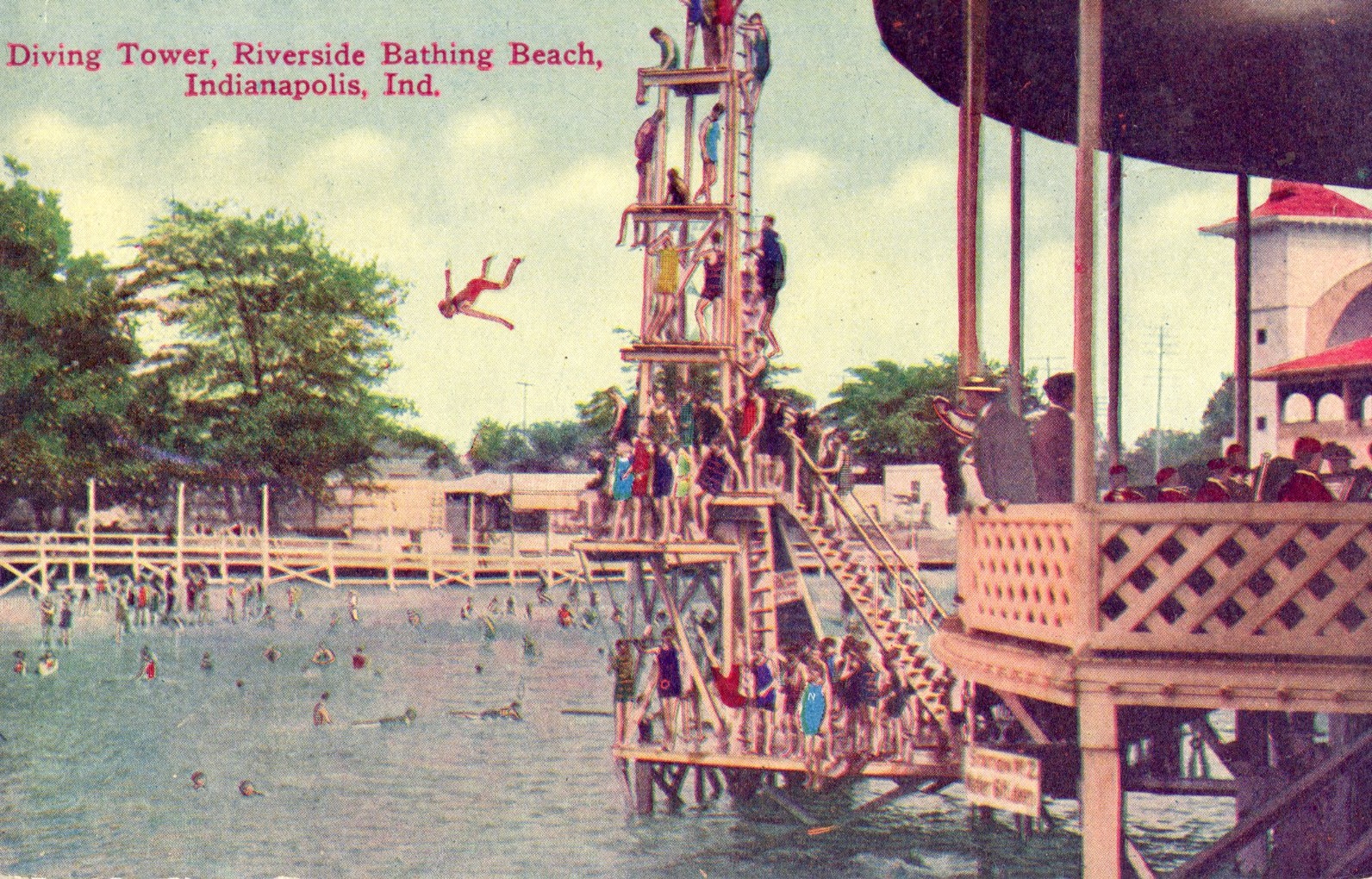
This amusement park existed from the early 1900s until 1970. The park land still exists under the name Riverside and fun can be had there, but the current park is nothing like it was during its heyday when it boasted of having multiple roller coasters, a massive roller skating rink and a bathing beach.

From an item in the Program Collection (L658), Rare Books and Manuscripts Collection.

From the Postcard Collection (P071), Rare Books and Manuscripts Collection.

Wonderland Amusement Park
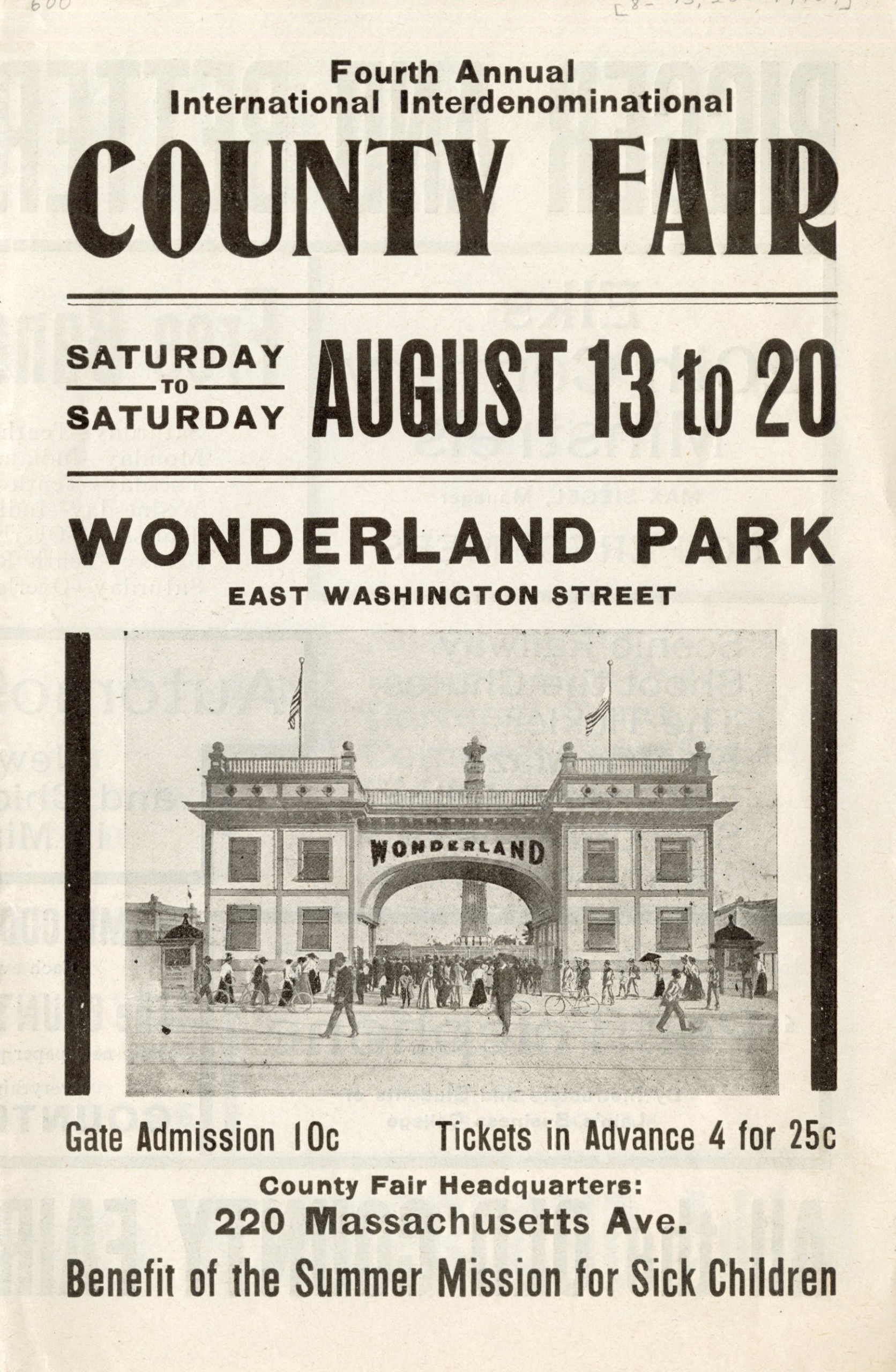
Another Indianapolis amusement park was Wonderland. Located on the east side of the city, the park was relatively short-lived, operating from 1906 until 1911 when it was destroyed by a fire.

Image shows park entrance in 1910. Program Collection (L658), Rare Books and Manuscripts Collection.

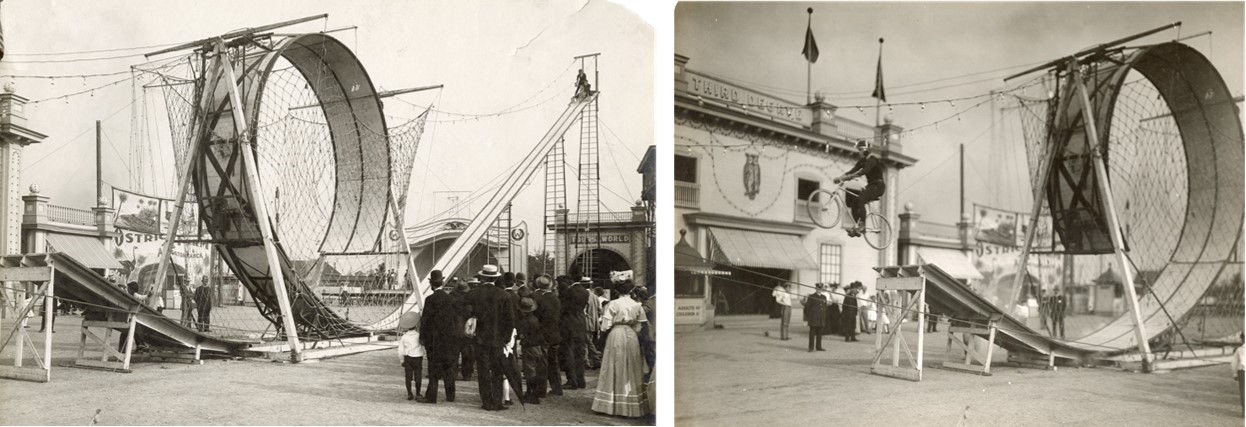
Like many amusement parks of the time, Wonderland hosted a variety of traveling performers who plied their death-defying feats at fairs and festivals throughout the country. In the summer of 1907, Indianapolis citizens could see stunt cyclist Oscar V. Babcock ride his bike through his thrilling Death Trap Loop.

Before and after picture of Babcock performing at Wonderland. From Oscar V. Babcock Photographs Collection (SP054), Rare Books and Manuscripts Collection.

Cyclorama
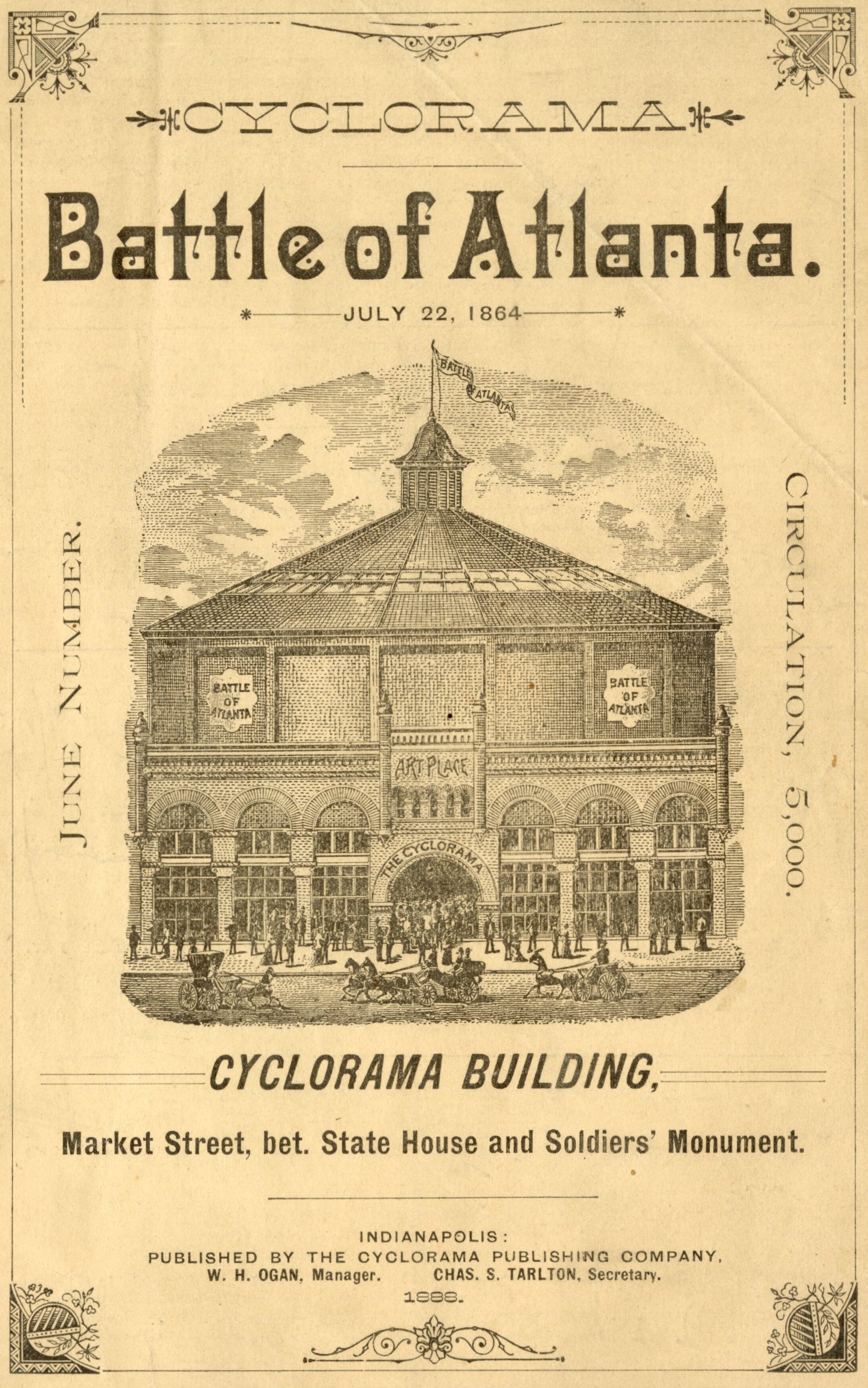
Cycloramas were a popular form of diversion in the late 19th century. They consisted of a platform surrounded by a 360 degree panoramic image. The goal was for viewers to stand on the platform and feel immersed in the scene depicted in the image, as though they were there in real life. Many popular cycloramas depicted battle scenes from the American Civil War and traveled from city to city. In 1888, the Indianapolis Cyclorama hosted a painting depicting the Battle of Atlanta. Standing at 49 feet tall and spanning over 100 yards, the painting must certainly have impressed visitors. Alas, by the turn of the century the fad for cycloramas had waned and the Indianapolis cyclorama building was eventually torn down. However, the Battle of Atlanta panorama still exists and can be viewed in person at the Atlanta History Center.

Program from Indiana Pamphlet Collection (ISLO 973.73 no. 35).

Visit the Indiana State Library’s Digital Collections to see more.

This blog post was written by Jocelyn Lewis, Catalog Division supervisor, Indiana State Library. For more information, contact the Indiana State Library at 317-232-3678 or “Ask-A-Librarian.”

The struggle is real: Reaching teens

One of the most common questions I get from library staff is “How do I get teens into the library?” For many libraries, it may seem as if it’s feast or famine – either they are swamped by after school crowds or they never see any teens step foot in the door. The crowds can be dealt with, but how do you get teens into the your library?

My go-to answer for the above question is, “Don’t expect them to,” meaning don’t expect them to come into the library, with expect being the key word here. Why would they come into the library? There’s a lot working against it – whether or not they can get a ride, what their friends are doing, how many after school commitments they have – the list goes on.  Going to the library has to be a conscious decision they make and then they must have the transportation and support to actually get there.

 Photo by Nicole Berro from PexelsSome better questions to ask might be, “Why aren’t the teens in my library?,” “What are the barriers to service?,” “What is structurally in place that stops them from coming in?,” and most importantly, “What can we do to overcome those barriers?”

The answer to these questions will be unique to each system and branch. Start by taking a close look at the culture and atmosphere of your library. Do teens feel welcome there? If no, what is causing them to feel unwelcome? Do your co-workers or administration understand why it’s good to have teen patrons, rather than becoming frustrated by them? I do staff day trainings on this topic and am working with the Young Adult Library Services Association to offer more workshops on teen services. The short version of the message I share in these trainings is that we can help teens gain important life skills through our programs. Well-rounded teens make for well-rounded citizens, and teens with positive library experiences make lifelong library users.

If transportation or busy schedules is a major issue, consider going to them. Where are they gathering? Is school the best place to reach them in a non-pandemic year? Could you reach them during lunch or after school at an extracurricular? Of course, COVID-19 has created an even bigger barrier. The answer to “where are the teens” right now is hopefully “home.” Even schools that are opening this fall will likely limit who can enter their buildings and public library staff may not make the cut. So, what can you do?

Look for other community groups that might help you reach teens. Connect with organizations in your area, such as social justice organizations, church youth groups, YMCAs or Boys & Girls Clubs, to arrange for on-site book pick-up and drop-off services, kit lending or even virtual programming. They may also be able to put you in touch with teens who are interested in particular topics – like gaming or STEM – or those who would make great teen advisory board members.

Figuring out who to partner with in your community is your first step. Take a look around. Drive through your streets and make note of organizations and businesses you might contact. Ask co-workers with teens what their kids do after school. Does your library have teen shelvers or pages? What do they suggest?

If you are from a community so tiny that you don’t have any groups or organizations to work with, might delivery be an option? Come up with a project that will benefit a charity, like making blankets to donate to your county’s Humane Society. Then offer to drop blanket making kits off at the homes of your teens. If that’s not feasible, reach out to your school librarian, or any other teacher with whom you have a relationship, and ask them to recommend teens for the aforementioned teen advisory board. Make it an honor that requires a teacher recommendation and will look good on their college applications! The board can meet via Zoom.

If you already have a pre-COVID established group of teen patrons, this may all be *slightly* easier for you. Zoom meetings and book clubs, YouTube craft tutorials and using Discord for chatting or gaming with your teen crowd have all been common ways to reach out to existing teen patrons. One example of a library using Discord with teens come from the Pendleton Community Public Library. Their teen librarian, Matthew Stephenson, had an established group of teen patrons before the pandemic and has stayed in touch with them using Discord. See my interview with Matthew below and check out this Discord tutorial, recorded by Andrew Laverghetta, a librarian from Eckhart Public Library.

Ultimately, what you do will depend on your unique community and what it needs. What works at one library may not work at yours. This is a time to reevaluate our library services and determine what is essential, and to refocus on quality over quantity. If you can have an impact on the lives of even a few teens in the middle of the pandemic, that’s significant.

**********************

Interview with teen librarian Matthew Stephenson, Pendleton Community Public Library:

How have you been reaching teens during this time?
As we moved our teen programs and services to Discord, the teens who were already using Discord embraced the “new normal.” However, we have a significant portion of teens who rely on places outside of their home for high speed internet that makes Discord, Zoom and other resources possible. Because of that, I think some teens who would enjoy and embrace our virtual services are unable to find a time or place to do so.

Did you already have a pretty solid group of teen patrons?
I had a very solid group of teens who would be in the library multiple times a week. Some have made a similar commitment online since March. Others I haven’t heard from since then.

Have you reached new ones?
A few teens have discovered our virtual programs and services through our summer reading program, which incentivized joining the library’s teen Discord server.

What other methods have you used, besides Discord?
I have used Netflix Party to watch and talk about anime as a group. I’ve had a few teens who want to watch a whole movie that way. I’ve tried to use Zoom, but most of the teens who have attended are leery of being on camera. Lastly, I recently used Kahoot! to make a quiz competition. A few of the teens really enjoyed it, but thought I made the quiz too difficult, which I am, admittedly, prone to do.

Examples of any virtual programs you’ve done?
I’ve converted our in-library video and tabletop game programs to virtual versions done through Discord. They can get five to ten participating teens on a regular basis, but can accommodate up to 50. Our Teen Quiz had several participants and was asynchronous, which seems to be more popular with teens since COVID-19 and our building project began in the spring.

Is the library open to teen patrons yet?
Most of the library is currently closed for renovations, but we are offering essential services, such as copying, faxing and circulation of materials in our community room. All computer sessions are limited to one hour and patrons are encouraged to not linger in the limited areas open to them. We hope to open the library to next phase of reopening, which we call ‘Grab and Go,’ in August.

Thoughts on how you have/might work with schools this fall, pending your area’s school reopening plans?
We are launching our “One Card One Student” initiative at the beginning of the school year, which will give every student in our school system a special library card to use our databases and check out e-books. I believe that will place the library as an even more important complementary element to improve e-learning for our community’s students. This is in addition to offering Tutor.com to our residents and placing our Student Portal front and center on our library’s homepage.

***************************

This blog post was written by Beth Yates, children’s consultant for the Indiana State Library.

 

Online resources for talking books

The Indiana Talking Book and Braille Library provides free library service to anyone in the state of Indiana who cannot use standard printed materials due to a visual or physical disability. While our service is primarily through the mail, there are some great online resources available that can help improve the service you are receiving. Here are a few of things to check out:

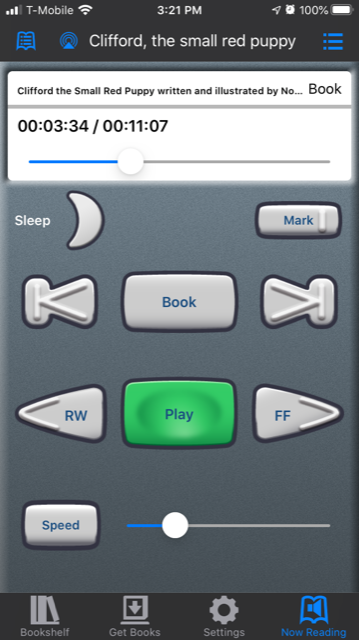
The BARD mobile app

BARD – Braille and Audio Reading Download
BARD is a free service through the Indiana State Library that gives patrons direct access to over 115,000 special format books, magazines and music scores. Audio books and magazines downloaded from BARD can be put on a flash drive and listened to using a library-provided talking book player. Patrons can also chose to utilize BARD Mobile for Apple, Android or Amazon Fire devices. There are never any wait lists or due dates for books downloaded from BARD. Whether you want the most popular book or you are looking for something a bit more obscure, it’s always available on BARD.

For more information, including instructions on signing up for BARD and for downloading books, please visit our website.

Talking Book Topics and Braille Book Review
Talking Book Topics and Braille Book Review are the publications produced by the National Library Service containing the latest releases in audio and braille. Typically, these NLS publications are mailed to patrons’ homes, but they can also be viewed online. Issues of the catalogs are available back to 2014 and can be accessed in html, plain text or as an accessible PDF. The html version contains links that will take you directly to the book on BARD, where it can be downloaded or added to your wish list for later. Patrons can also order books out of any of the catalogs by calling or emailing the library and giving us the book number or title.

List of Books by Topic or Genre
NLS has also created broad bibliographies containing extensive lists of books in the categories of gentle romance and westerns, as well as mini-bibliographies, which contain lists of books on more narrow topics such as guide dogs and Booker Prize winners. These are a great resources if you are looking for some inspirations on what you might want to read next.

This blog post was written by Maggie Ansty of the Indiana Talking Book and Braille Library. 

Keeping clean: Methods your State Library takes to make sure your library experience is safe

The COVID-19 pandemic has brought about sweeping changes to the way we live, work and interact with one another. Tasks we take for granted, such as going to the grocery store, meeting with friends and even going to the library to find materials for research have been made somewhat more challenging to carry out. Here at the Indiana State Library, we do a lot to keep everything clean and to ensure that both patrons, and ourselves, have a fun and safe library experience.

Several studies have noted that the virus survives on hard surfaces for about two or three days, and up to 24 hours on paper. Sanitization is top priority at the library, and the staff makes sure to clean and disinfect all surfaces as often and thoroughly as possible. In the case of books, which understandably do not do well to be soaked in cleaners on a regular basis, they are placed in isolation for a set period of time until it is safe to return the materials to the stacks.

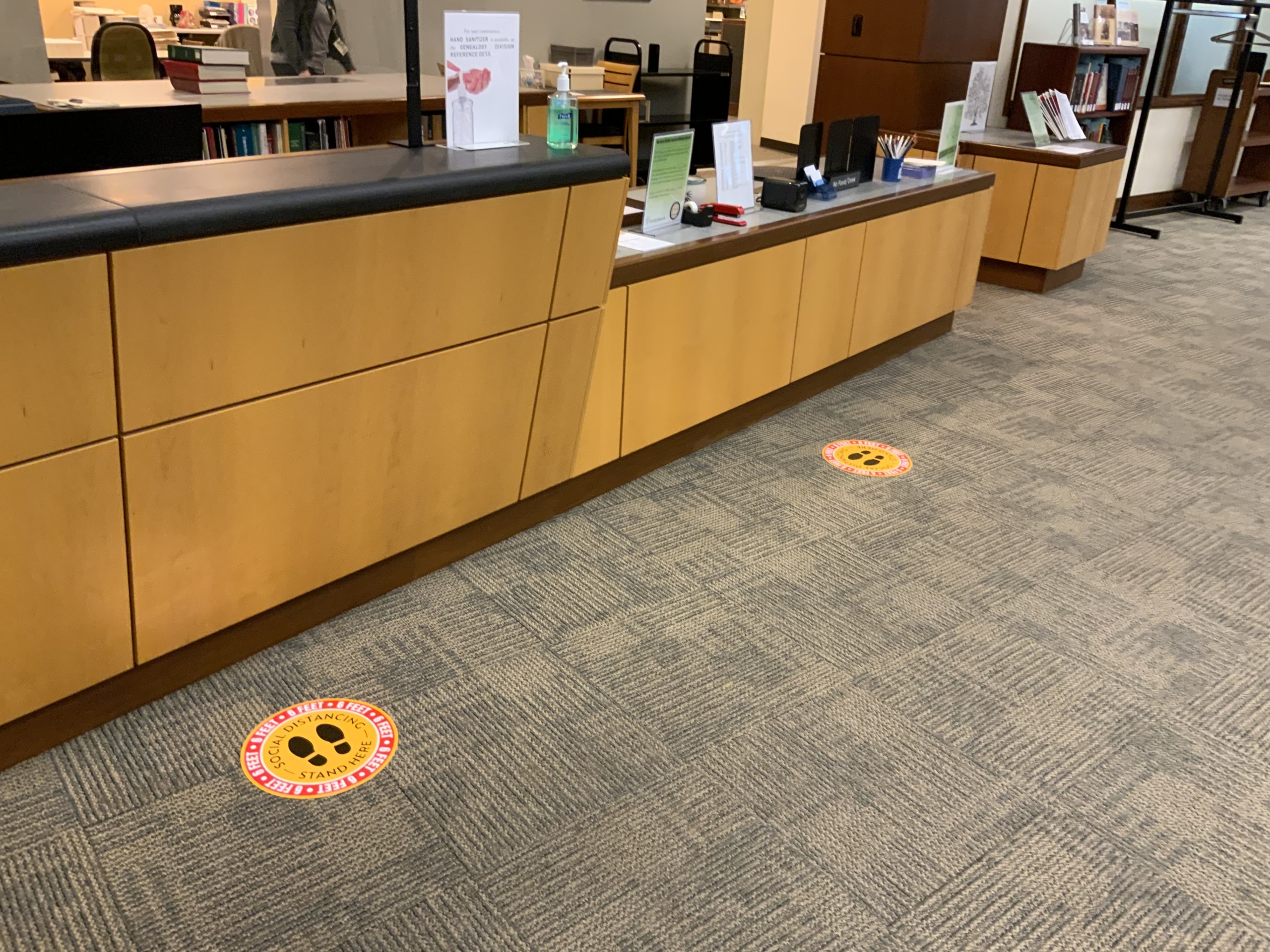
Patrons are welcome to come inside the building, but to encourage social distancing and personal safety, that library is operating on an appointment-only schedule. If you are a walk-in patron and didn’t make a prior appointment when you stop by, don’t worry. If we have appointment slots available, we will still be able to help you with your research needs. Seating arrangements to encourage social distancing are available, hand sanitizer is provided at the information desks and also next to each elevator in order to keep things clean, and to reduce the spread of the virus and other bacteria. Are you unavailable to come to the library personally? Patrons can chat with a librarian through Ask-a-Librarian, with no charge.

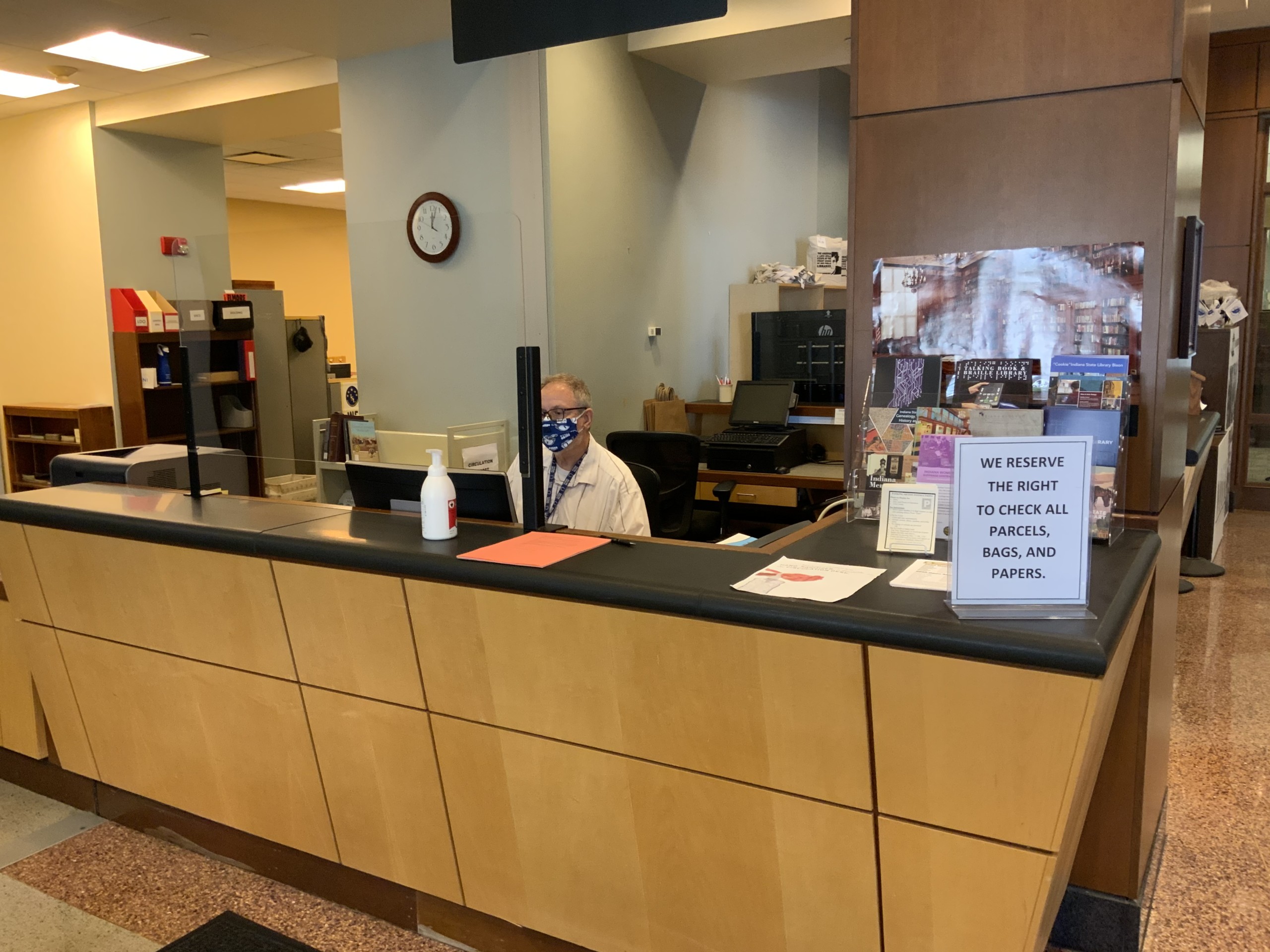
As per county mandates, face masks are required for entry into the library facility. Don’t have a mask? No worries. We provide free paper masks at our circulation and information desks. Simply ask the librarian or desk attendant and we will be happy to give you one. If you live in Marion County and you’re seeking something a bit more permanent and portable, the city of Indianapolis and IndyGo have partnered to provide free cloth face masks that can be picked up at the Julia M. Carson Transit Center in downtown Indianapolis. Masks can also be ordered online.

We hope that these procedures and precautions allow to you to fully utilize all the services the Indiana State Library has to offer, all while keeping you safe and giving you peace of mind.

Please call 317-232-3675, email or use our Ask-a-Librarian service to schedule an appointment.

This post was written by Damon Lawrence, library technician 2, Indiana State Library.

Newspapers, a great source for family history… and other tidbits

Newspapers are a great source for genealogy and history information. They can provide new details about your family through obituaries, human interest stories and the society pages. Newspapers can also provide background stories and unexpected context that flesh out your ancestors’ lives and experiences. So, here are some examples of the family history information to be gleaned from newspapers.

Indianapolis Times, March 21, 1936, page 12

Vital records articles cover birth, marriage and death information. These can include vital statistics columns from local hospitals, marriage announcements in the society pages and obituaries. Those columns give you biographical details on specific ancestors and can help you outline familial structures. Obituaries are a particularly good source for details, as they often name parents, siblings and children. They are especially useful prior to the use of birth and death certificates.

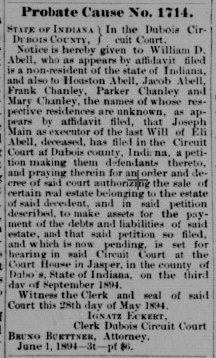
Jasper Weekly Courier, June 1, 1894, page 4

Legal notice articles also provide insight into your ancestors’ lives. Court notices may list all the cases being heard in local courts or they may list cases where public notice is required, such as name changes. These columns also include listings of land transfers, so if you are researching property or trying to figure out exactly where your ancestors lived, these articles can help.

Richmond Palladium, June 29, 1921, page 4

Society pages document the doings of the members of a community. In big cities, these columns often focus on the lives of the rich and famous, but in smaller communities everyone is covered. Do you want to know what they ate at the annual community picnic?  Interested in what your great-grandmother got at her wedding shower? These articles are for you! Beyond knowing the minute details of your ancestors’ lives, those who attended momentous life events were often close friends and family, giving you an idea of who your ancestors knew and with whom they associated.

Indianapolis Times, February 23, 1934, page 30

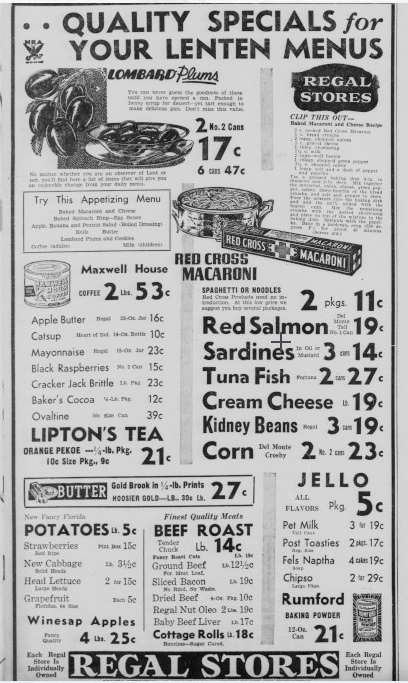
Even advertisements tell us about our ancestors’ lives. Grocery ads, clothing ads, car ads, etc., show us the products people of the past bought and used. Some products are still on the market today, but many are things that are no longer available. Relatedly, columns covering fashion, cooking and housekeeping also show how people lived.

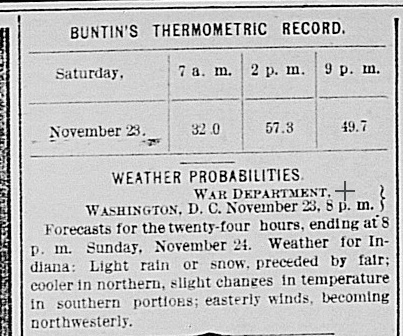
Daily Wabash Express, November 24, 1889, page 6

Local news columns show details about the past, from weather forecasts to crime reporting to local election results. These articles show the day to day events our ancestors experienced as well as local responses to and state and national events. They provide a contemporaneous perspective on past events.

Looking for newspapers? All the images used in this article were taken from Hoosier State Chronicles, the Indiana State Library’s free digital newspaper database. We also offer access to several subscription newspaper databases in the library, as well as the world’s largest collection of Indiana newspapers, accessible on microfilm.

This blog post is by Jamie Dunn, Genealogy Division supervisor.

New state law changes provisions related to employing minors

There are a number of benefits to having teenagers in the workforce, a couple of which are that it tends be cheaper for the employer than hiring adults, and it gives the teenagers some work experience and connections that could be valuable later in life. However, it is important to balance the needs of employers with the needs of the teenagers, who may still be in school. There are both federal and state laws in place that provide some basic guidelines for employers when it comes to teen employees.

Image Credit: Child Labor Laws by Nick Youngson CC BY-SA 3.0 Alpha Stock Images

Image Credit: Child Labor Laws by Nick Youngson CC BY-SA 3.0 Alpha Stock Images.

The federal Fair Labor Standards Act sets wage minimums, work hours and safety requirements for workers under the age of 18 who are working in jobs that are covered by the law. For information on the Fair Labor Standards Act as it applies to minors, click here.

IC 20-33-3 is the chapter of Indiana state law that traditionally covered employer limits on employing students. However, the part of the law where you will find these limitations has moved from Title 20 (Education) to Title 22 (Labor and Safety).

In the 2020 legislative session, the Indiana General Assembly made a number of changes to Indiana’s laws related to employing students, only one of which was moving the teen labor laws to a different part of the code. A few of the additional changes are as follows:

The Bureau of Child Labor is now called the Bureau of Youth Employment. Work permits are no longer required for students who are not Indiana residents, or for home schooled students, or students enrolled in a career and technical education program. However, working hour restrictions still apply. Break requirements have been eliminated. Working hour restrictions for 16 and 17-year-old students are the same now. Work permit termination notices are no longer required to be sent to the school upon worker termination. Minors less than 16 years old may not work during school hours. Employers who employ at least five minors age 14 to 17 must register with the Indiana Department of Labor and a minor may not work in an establishment that is open to the public after 10 p.m. or before 6 a.m., unless another employee who is at least 18 years of age also works with the minor.

The Indiana Department of Labor has a summary  document available that describes some of the additional changes. To read about all the changes, review SEA 409 in its entirety.

This blog post was written by Sylvia Watson, library law consultant and legal counsel, Indiana State Library. For more information, email Sylvia.

2020 census operations continue; self-response deadline extended

Even though the COVID-19 pandemic created delays in the Census Bureau’s 2020 census operations, the 2020 census continues to move forward. Because of the pause due to the pandemic, it is important for librarians to get the word out that it’s not too late to participate in the census. U.S. residents now have until Oct. 31 to use self-response methods to complete the forms for their households.Beginning on Aug. 11, the Census Bureau plans to send out workers for the non-response follow-up part of census operations. Census workers will be clearly identified as they go door-to-door to visit homes. They will operate through Oct. 31 to help residents complete questionnaires until every household is counted.

This means July is a key month to remind library patrons to count their own households before a census worker comes to their door. Librarians can instruct patrons to follow the steps below in order to help them complete the census:

  • Go to the Census Bureau’s online portal and enter the Census ID they received in the mail. If they don’t have a Census ID, click the button that says Start Questionnaire, then click the link that says “If you do not have a Census ID, click here” and follow the prompts.

OR

  • Call the Census Bureau at 844-330-2020 for English, or at 844-468-2020 for Spanish.

OR

  • Fill out the 2020 Census form they received in the mail and mail it back.

It’s that easy, and it should only take 10 minutes!

It is important to continue providing information about the 2020 census to ensure a complete and accurate count of our communities. This once-per-decade count will determine political representation, federal and state funding and planning decisions for the next 10 years. Find outreach materials on the Census Bureau’s website and Indiana’s 2020 Census website.

The State Data Center at the Indiana State Library is here to help you with questions and further outreach through Oct. 31. Contact us here.

This blog post by Katie Springer, reference librarian. For more information, contact the Reference and Government Services Division at 317-232-3678 or submit an Ask-A-Librarian request.

Government Information Day virtual conference

Save the date! The Indiana State Library and INDIGO are pleased to announce that Government Information Day will take place on August 6-7. The conference will now be held virtually. The two-day event will feature seven programs promoting government information literacy and resources. The conference is free to attend. Public librarians will be eligible to earn LEUs for each session. This is the fourth Government Information Day, but the first in a virtual format.

Additionally, Federal Depository Library Program libraries in the west are hosting the “Western States Government Information Virtual Conference” on August 5-6. As such, both groups are working together to promote both events as part of Government Information Week. There is now an opportunity for librarians to view government information themed presentations Wednesday,Thursday and Friday, with a regional coordinators meeting on Tuesday. The first week of August will be referred to as “Government Information Week.”

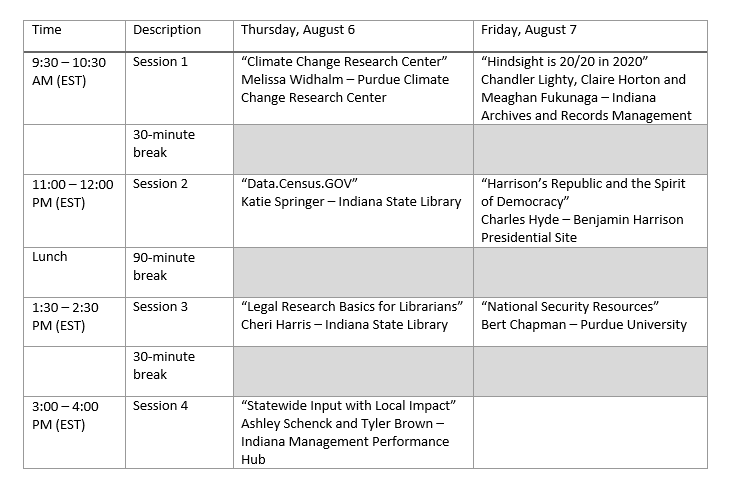
Click here to register. Attendees will have the ability to register for as many or as few sessions as they desire. Below is the schedule for GID2020, along with session titles and a brief description of each talk. If you have any questions or concerns, please feel free to contact Brent Abercrombie, Indiana Regional Depository librarian and GID Planning Committee chair.

Government Information Day 2020 virtual conference schedule:

GID2020 titles, presenters and descriptions:

“What does climate change mean for Indiana?”
Presenter: Melissa Widhalm, Operations Manager, Purdue Climate Change Research Center
Our climate shapes our lives. The ways we build our roads, manage our farms, move our water and use energy are all influenced by our unique Indiana climate. But our climate has been changing, and it will continue changing in ways that affect our productivity, our safety and our livelihoods. We need to know what climate change means for Indiana. Led by the Purdue Climate Change Research Center, the Indiana Climate Change Impacts Assessment provides the latest scientific research to help Hoosiers understand and prepare for the impacts of a changing climate. This presentation will highlight results from the IN CCIA analysis.

“Data.Census.gov”
Presenter: Katie Springer, Data Center Librarian, Indiana State Library
In March of 2020, the Census Bureau’s data portal for the last few censuses, American FactFinder, ceased to exist. This means no more long lists of complicated geographies to sort through! This also means we’ll have a brand new system to learn. The new dissemination platform is at Data.Census.gov. This session will demonstrate the new platform. The session will explore the new way to search for census data and learn how to filter searches, download and modify tables and view maps. “Put on your learning caps!”

“Legal Research Basics for Librarians”
Presenter: Cheri Harris, Certification Program Director and Legal Consultant, Indiana State Library
This presentation will help library workers answer legal research questions from patrons and will also help them assist patrons who are doing their own legal research. Starting with an overview of different types of legal authority, the presentation will help distinguish between primary and secondary authority. Strategies and tools for finding state and federal statutes, regulations and case law will be reviewed. Paying special attention to Indiana materials, a demonstration on how to use a variety of free websites to conduct legal research online be shared. Finally, the session will conclude with tips for how to stick to conducting legal research and avoid providing legal advice.

“Statewide input with local impact”
Presenter: Ashley Schenck and Tyler Brown, Indiana Management Performance Hub
Indiana Management Performance Hub provides analytics solutions tailored to address complex management and policy questions enabling improved outcomes for Hoosiers. MPH empowers its partners to leverage data in innovative ways, facilitating data-driven decision making and data-informed policy making.

“Hindsight is 20/20 in 2020”
Presenters: Chandler Lighty, Executive Director, Indiana State Archives; Claire Horton, Deputy Director, Indiana State Archives; and Meaghan Fukunaga, Deputy Director for Electronic Records, Indiana Archives and Records Management
The Indiana Archives and Records Administration turned 40 in 2019. Hear about the current state and future plans for the State Archives. Learn about the archival collections and services, and how IARA staff can assist public library patrons with their information needs.

“Harrison’s Republic and the Spirit of Democracy”
Presenter: Charles Hyde, President and CEO, Benjamin Harrison Presidential Site
“An American citizen could not be a good citizen who did not have a hope in his heart.” With this ringing invocation, the 23rd President called the United States of America to higher purpose, and helped set it on course for the modern era. While his signal leadership is under known, there is no mistaking his spirited advocacy of some of the most important policies that have come to define our country legally and spiritually over the past century. The Benjamin Harrison Presidential Site carries on this legacy in innovative, impactful and engaging ways, with unexpected relevance to conversations our country is having today.

“Publicly Available Information Resources on U.S. National Security”
Presenter: Bert Chapman, Government Information, History, and Political Science Librarian, Purdue University Libraries and School of Information Studies
This presentation will describe how to find and use publicly-available information resources. It will stress the constitutional foundations of U.S. national security policy and present examples of U.S. national security literature through annual defense spending bills, materials from U.S. armed service branches, congressional oversight committees and various intelligence agencies.

This blog post was written by Indiana State Library federal documents coordinator Brent Abercrombie. For more information, contact the Reference and Government Services at 317-232-3678 or via “Ask-A-Librarian.”

What is a library roundtable?

Roundtable defined
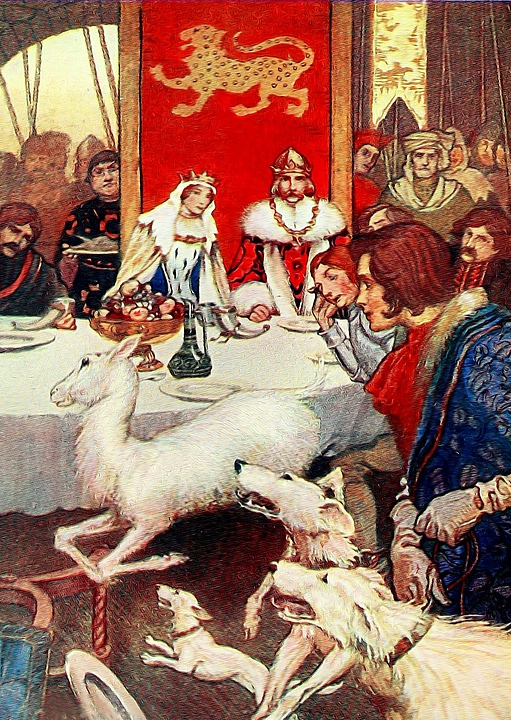
What comes to mind when you hear the words “library roundtable?” Is it a round table in a library? No, that’s not quite what I’m talking about. Does it have something to do with King Arthur? Not really, but the symbolism of the legend of King Arthur’s famed table could lend itself to our modern idea of a library roundtable.

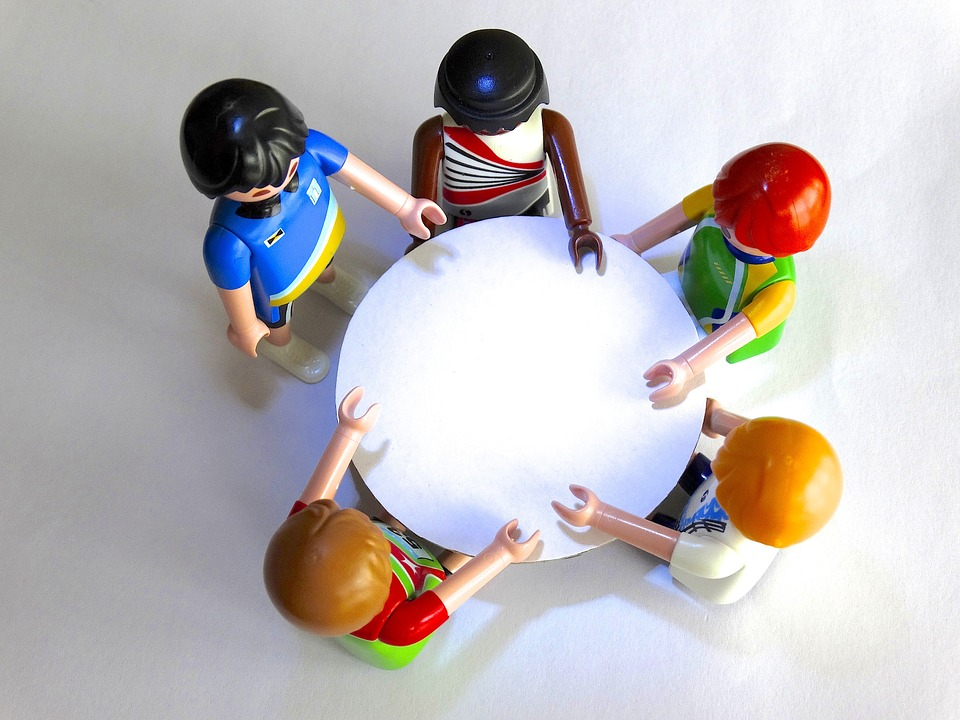
So, what are library roundtables? Generally, a roundtable is defined as “a conference for discussion or deliberation by several participants.” In the library world, not unlike the table in King Arthur’s court, all members of a roundtable are of equal status and no one is at the head of the table.

Library roundtables have been going on for many years throughout Indiana. Traditionally, library roundtables are discussion groups that meet in person. Members of these groups are comprised of library staff with similar jobs.

Benefits of library roundtables
There are many advantages and benefits of being a part of a library roundtable group. They’re a great way to network with your professional peers. These connections can be beneficial to your current and future career opportunities. These groups are also effective for discussing ideas, problems and plans. They can act as a pseudo support group if you need a sympathetic ear, as sometimes there are private and sensitive issues that you don’t want to put on a public forum. Roundtables should be a no judgement zone where you can hear differing opinions and views. Insights and experiences from your peers are invaluable. They also provide an opportunity, in an informal setting, to share knowledge, ask questions and discuss solutions at a deeper level than in a formal training or conference setting. It’s a wonderful forum for brainstorming, connecting and sharing programming ideas.

An extra bonus of library roundtables are visiting other libraries. This is a wonderful opportunity to see how other libraries are set up and organized. I love visiting libraries to see what furniture they have, what colors they chose, what their displays look like. You can get awesome ideas to take back to your library.

Who can attend a library roundtable?
Pretty much anyone working in a library can attend a library roundtable. There are roundtables for library directors, branch managers, children’s, circulation, IT, reference and teens. Before attending, check with your department head or director first to make sure that your current job could benefit from participating and that attending works with staffing considerations. There are established roundtable groups all over the state of Indiana. If you have a question about roundtables, you can contact your regional coordinator or children’s coordinator and they can connect you with a group.

What if I’m not able to leave my library to attend a roundtable?
Many library roundtable groups have been meeting virtually using networking software such as Zoom, GoTo Meeting, Google Meeting or Microsoft Teams. Some networking software is free – with time restrictions – and others are subscription based. Equipment recommended for virtual roundtables include a device with a camera, microphone, keyboard and speaker. The camera and microphone are not entirely necessary, but essentials are a keyboard, to be able to participate in chat and a speaker, to hear what others are saying. Whatever virtual networking software you have access to, you should be able to use them on a tablet, laptop or smartphone. Along with your discussion, maybe think about adding a virtual tour of your library.

There have been quite a few new virtual roundtables established recently: adult services, bookkeepers, children’s, library directors, games and gaming, marketing, programming, teen and a new webmasters group, which is currently in the works. A grievance I’ve often heard is, “I wish I could attend the roundtable that was posted on the Listserv, but it’s at the opposite side of the state.” With the virtual meetings, you no longer have that travel barrier.

LEU information
Library Education Units may be earned by attending roundtable discussions. If your library job is classified to earn LEUs, page 12 of the Indiana State Library Certification Manual for Public Library Professionals spells out the parameters:

  • 1 LEU per roundtable attended.
  • LEUs are capped. Earn up to 10 LEUs per five-year certificate period attending professional roundtable meetings.
  • Professional roundtables do not require prior LEU approval from the Indiana State Library.
  • The host library shall create and award LEU certificates for all attending library professionals

Note: Only individuals holding a five-year certificate are eligible to count LEUs from professional roundtable meetings.

Interested in hosting a roundtable?
If you’d like to start or join a roundtable that doesn’t already exist, you can contact your regional coordinator or children’s coordinator from Indiana State Library’s Professional Development Office. They will assist you with getting a roundtable started.

Being a meeting leader does not require a lot of time, and Indiana State Library staff are here to assist with organizing and publicizing the first meeting. Roundtables are usually a collective effort with everyone contributing. Often, attendees take turns hosting.

Your primary responsibilities would include:

  • Setting the first meeting date.
  • Setting up the meeting in your meeting software.
  • Setting a general topic of discussion for the first meeting.

Articles about roundtables
Finally, here are some articles you might find helpful in your roundtable research:

“The Roundtable discussion: What, When Why”
“13 Tips for Planning and Hosting Successful Roundtables”

You can also find this information on the newly-created Indiana Roundtable Discussion Groups for Library Staff page on the Indiana State Library website.

This post was written by Northeast Regional Coordinator Paula Newcom, Professional Development Office.

Celebrate Juneteenth with books for young people by Indiana authors

Juneteenth, which takes place on June 19 annually, celebrates the implementation of the Emancipation Proclamation across the United States. While all enslaved people in the Confederate States were declared to be legally free on January 1, 1863, in practice many slaves in western states were not free until years later. On June 19, 1865, enslaved African Americans in Texas were finally made free by executive decree. Juneteenth has been celebrated for over 150 years.

Celebrate this Juneteenth by reading the Emancipation Proclamation available through the National Archives or by learning more about this holiday through the National Museum of African American History. Honor African Americans by reading books by African American authors.

The Indiana Young Readers Center has put together this list of books, new and old, so that people of all ages can engage with rich stories for everyone told by African Americans with Indiana connections.

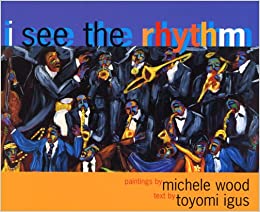
“I See the Rhythm” text by Toyomi Igus, with paintings by Michele Wood

Winner of the 1999 Coretta Scott King Award for outstanding African American authors and illustrators of books for children and young adults that demonstrate an appreciation of African American culture and universal human values, this primer of history is told through the amazing art of Hoosier Michele Wood and the exuberant verse of Toyomi Igus. Read this book to experience the rhythm of African American history.

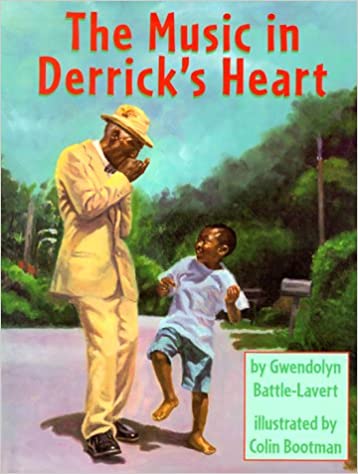
“The Music in Derrick’s Heart” by Gwendolyn Battle-Lavert, illustrated by Colin Bootman

Looking for a picture book? This is a sweet story about Derrick who is aching to learn how to play the harmonica from his uncle, Booker T. Children will love hearing about Derrick’s passion and how he tapes his harmonica to his head and his heart when he sleeps. Dr. Gwendolyn Battle-Lavert is from Marion, Indiana and is the author of several children’s picture books including “Papa’s Mark,” “The Shaking Bag” and “Off to School.”


“Singing Black: Alternative Nursery Rhymes for Children” by Mari Evans, illustrated by Ramon Price

Nursery rhymes, with their simple words and sing-song rhythms have enthralled and excited youngsters for centuries. But most of the best-known rhymes reflect a limited Western perspective. “Singing Black” is a charming collection of original short poems by award-winning poet and writer Mari Evans that draw their inspiration from black culture. Evans made her home in Indianapolis for nearly 70 years.


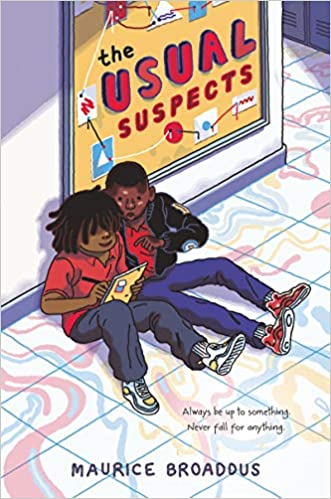
“The Usual Suspects” by Maurice Broaddus

If you are in the mood for a good middle-grade mystery, look no further. Thelonius Mitchell is tired of being labeled. He’s in a special education class, separated from the “normal” kids at school who don’t have any “issues.” When a gun is found at a neighborhood hangout, the school administrators start their inquiries right in Thelonius’s class. Thelonius feels the injustice deeply and sets to work right away to solve the mystery. Maurice Broaddus lives and works in Indianapolis and is the author of several books for grown-ups as well as children.


“Tyler Johnson Was Here” by Jay Coles

A stunning young adult novel about police brutality in modern American. When Marvin Johnson’s twin brother Tyler goes to a party, Marvin decides to tag along to keep an eye on him. But what starts out as harmless fun turns into a shooting, followed by a police raid. The next day, Tyler is missing and Marvin wants nothing more than to find his brother alive and safe. The chilling truth is that Tyler is dead; shot and killed by a police officer. Author Jay Coles wrote this book based on true personal events. Jay Coles lives in Indianapolis and is also a teacher and musician.


“The Season of Styx Malone” by Kekla Magoon

Looking for a summer friendship story? Meet Caleb and his brother Bobby. They are excited for a whole summer of exploring the woods when they meet newcomer, Styx Malone. Oozing cool from every pore, Styx convinces the two brothers to help him pull off the Great Escalator Trade – exchanging one small thing for something better until they achieve their final goal. But, as one thing leads to another, the boys seem to know less and less about their new friend. Award-winning author Kekla Magoon grew up in Indiana and is the author of many books for young people including “How It Went Down,” “Shadows of Sherwood,” “X: A Novel” and “The Rock and the River.”

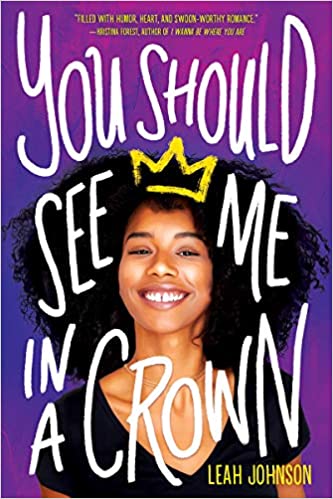
“You Should See Me in a Crown” by Leah Johnson

Liz Lighty has always believed that she’s too black, too poor and too awkward to shine in her small, rich, prom-obsessed Midwestern town. But it’s okay – she has a plan that will get her out of Campbell, Indiana, forever – one that revolves around financial aid that unexpectedly falls through. Liz is devastated until she remembers that her school offers a scholarship for the prom king and queen. This brand new book by debut author Leah Johnson is a number one new release on Amazon. Though Johnson currently lives in Brooklyn, New York she was born and raised in Indianapolis and is a tried and true lifelong Hoosier.


This blog post was submitted by Indiana Young Readers Center Librarian Suzanne Walker.