Proper decoration: Margaret Armstrong’s publisher’s bindings

The years 1860-1920 saw great changes in book design, led by technological developments, refining marketing strategies and shifting ideas about the relationship between book and text. Expanding literacy led to increased demand and a new market to attract via an expanding literate middle class. Previously, book bindings were produced by the bookseller. This changed in the 19th century and publishers began providing the bindings. During this time, newly popular cloth covers were produced which were cheap compared to their leather counterparts; but, unlike even less expensive paper boards, could be adorned in a manner that hinted at the beauty of custom bindings commissioned by those who could afford them. Book design soon became its own profession led by women.

Both the general and Indiana author collections at the Indiana State Library hold many fine examples of these cloth publisher’s bindings. The greatest numbers of them are from designer Margaret Armstrong, which is not surprising given that she was arguably the most successful.

New York artist Armstrong (1867-1944) was one of the first professional binding designers in the U.S., designing her first covers in 1887. Her work continues to be uncovered, so reports of how many covers she designed vary, but it is now understood to be over 300. The bulk of her work was for Scribner’s, where she got her start, but she worked with many publishers as her popularity grew because book designers were hired on a freelance, project-by-project, basis. She often employed floral motifs in her designs and went on to write and illustrate a book on Western American wildflowers; but, as you will see in the examples here, she was a very flexible and adaptable artist with work that varied in style more than some of her peers.

As an early contributor to the field, Armstrong had a hand in the shift toward developing designs that directly reflected the work within their pages, something that is taken for granted now, but was not generally the case before this period. When asked whether attention should be given to having the cover reflect the often vibrant contents of the book, she replied: “Yes, I think so. Pretty covers for cheap books have never been done until now.” Pretty was not the only purpose though, and different colors and motifs were used to signal to the reader what they might expect from the pages within.

"Adventures of Captain Horn" book cover.

Frank R. Stockton, “The Adventures of Captain Horn.” New York: Charles Scribner’s Sons, 1895.

One example of how Armstrong used design to communicate with her readers was by assigning colors to her Scribner’s authors and periods of their work. Beginning with this book, she designed Stockton on green cloth to contrast with the blue of Henry Van Dyke. Myrtle Reed designs appeared in lavender. This book belonged to noted Indiana book collector Frank Graef Darlington. Many of the nicer copies of books with notable publisher’s bindings came from donors, though copies also exist that would have been purchased when they were published along with other popular books to grow the general collection.

"The Yoke" book cover.

Elizabeth Miller, “The Yoke.” New York: Grosset & Dunlap, 1904.

The Egyptian motif is not typical of Armstrong’s work, but reflects the book’s contents: an historical romance in Egypt during the exodus of the Israelites. The artist’s signature, her initials, can be found underneath the flower on the right side of the cover under the title.

Zoom in of the initials M.A.

Book cover of "The Defective Santa Claus."

James Whitcomb Riley, “A Defective Santa Clause.” Indianapolis: Bobbs-Merrill, 1904.

Armstrong’s work outside of Scribner’s gave her an Indiana connection when she did some designs for the Indianapolis-based publisher Bobbs-Merrill, which resulted in a cover for James Whitcomb Riley. Her background as a naturalist appears here in the holly theme. She shows a preference for a holly in other Christmas books designs, as seen in her Charles Dickens covers.

Book cover of Margeurite Minton's "Captain Lettarblair."

Margeurite Minton, “Captain Lettarblair.” Indianapolis: Bobbs-Merrill, 1906.

This is an example of a cover design by Armstrong that incorporates symbols from the text. The red roses symbolize the love between Captain Letterblair and his love interest Fanny, while the clover represents his good fortune. Both hints of the happy ending in this traditional three-act comedy.

Book cover of "Cape Cod."

Henry David Thoreau, “Cape Cod.” New York: Thomas Y. Crowell Company, 1908.

Armstrong’s father was a stained glass designer, and this is seen as an influence on her work, as exemplified by this edition of “Cape Cod.” These designs contrast with her more naturalistic later work.

Book cover of Gene Stratton Porter's "The Song of the Cardinal."

Gene Stratton Porter, “The Song of the Cardinal.” Indianapolis: Bobbs-Merrill, 1912.

Unsigned, but frequently attributed to Armstrong, this Gene Stratton Porter novel is the only example of her use of red cloth that exists in the State Library’s collections. More examples can be found in other institutions. It is also one of the better examples of the influence of Art Nouveau on her work.

Much has been written about Armstrong, and by better authorities. For more information, please see the blogs and digital exhibits below:

“In Full Bloom: Margaret Armstrong’s Decorated Publishers’ Bindings Revisited”
“The Companionable Book Cover Designs of Margaret Armstrong”
“The Book Beautiful: Margaret Armstrong & Her Bindings”

This post was written by Victoria Duncan, Rare Books and Manuscripts supervisor.

Summer Reading in Indiana

Summer is a busy time in Indiana public libraries, as most host several weeks of summer reading programming. In fact, public libraries in Indiana are required by the public library standards to offer at least six weeks of a reading program each year, and most choose summertime  – when school is out –  to accomplish this. During the summer, many libraries offer enhanced programming including story times, crafts, movies, games, parties and even daily lunch (in partnership with USDA’s Summer Food Service Program). Some libraries award prizes based on the number of books, pages or hours read. Some use paper reading logs, others use apps like Beanstack. Larger libraries, like the Indianapolis Public Library, even add additional temporary staff during summer months to help administer their programs.

Poster featuring dinosaur that says, "Unearth a Story."Summer Reading programs are usually centered around a theme, so there’s no reason for library staff to start from scratch each year. All libraries in Indiana can access thematic resources through the Collaborative Summer Library Program (CSLP), an organization that creates summer reading programming and graphics that may be used by libraries around the world. 2026’s theme is “Unearth a Story,” so you may have seen dinosaurs among the stacks at your local library. These materials are made possible in part by Library Service and Technology Act grants awarded to the Indiana State Library by the federal Institute of Museum and Library Services (IMLS).

Decorative logo. The Indiana State Library’s Talking Books and Braille Library is also hosting a statewide Summer Reading program for readers of all ages with a print disability. Books are available to borrow from the library in braille, large print and digital audio formats and TBBL staff help select and ship materials to patrons. Participants will receive a gameboard and other activities to complete and prizes are also available.

A newer national summer reading offering, also sponsored by IMLS, is the Second Lady’s Summer Reading Challenge. Children in grades K-8 are encouraged to read twelve books before Sept. 4, complete a fillable tracker and receive a certificate, small prize and chance to visit the Nation’s Capital.

Kids and police officers in foam, during a foam party.

“Lowell Public Library readers and Lowell Police Department enjoy a foam party during the 2025 summer reading program.”

Several Indiana State Library staff work behind the scenes to support summer library programs that help boost literacy and provide lasting positive memories for Hoosier children. Statewide children’s consultant, Beth Yates, provides trainings and resources for library staff statewide. These fun, interactive trainings occur all around the state during the winter months giving libraries plenty of time to prep and plan for summer. During the summer, Indiana Young Readers Center librarian Tammie Buchanan hosts readers, oversees the Indiana Early Literacy Firefly Award voting and lends thematic kits to libraries. Additionally, Abby Chumin, from TBBL, serves on the CSLP Board of Directors helping to guide decisions and future programming. New for 2026, Yates is planning a Summer Reading Summit for library staff at the Indiana State Library in December. Details on that will be shared on the library’s website once available.

There’s still plenty of time to check out what’s happening this summer at your local library!

This blog post was written by Jen Clifton, Library Development and Professional Development Office director.

The Mount St. Helens volcanic eruption

Located in the Gifford Pinchot National Forest in Skamania County, Washington, Mount St. Helens is a stratovolcano and part of the Pacific Ring of Fire, an area known for earthquakes and volcanic eruptions.

On Sunday, May 18, 1980 at 8:32 a.m. Pacific Time, Mount St. Helens erupted. An earthquake measuring 5.1 on the Richter scale preceded the eruption. The eruption lasted nine hours, causing landslides and mudslides, along with the devastation of the forests, lands, vegetation, wildlife, residences and roads in the area. In addition, volcanic ash dust traveled across 11 states and even some areas of Canada several days after the eruption. A total of 57 people lost their lives. After the Mount St. Helens Eruption, the United States Army Corps Engineers began recovery and construction efforts.

In August 1982, the United States Congress passed the Mount St. Helens National Volcanic Monument Act. The act was signed into law by President Ronald Reagan, officially establishing the Mount St. Helens National Volcanic Monument where the public could visit the area and for scientists to conduct research.

In May 2025, the United States Geological Survey Library commemorated the 45th anniversary of the volcano’s eruption with a special exhibit at the United States Geological Survey National Center in Reston, Virginia.

The Indiana State Library has several titles in its federal documents collection relating to the Mount St. Helens Eruption:

"The Eruption of Mount Saint Helens" federal document cover.

“The Eruption of Mount Saint Helens: May 18, 1980.” ISLM C 55.2:ER 9

"Volcanic Eruptions of 1980 at Mount St. Helens" book cover.

“Volcanic Eruptions of 1980 at Mount St. Helens: The First 100 Days.” ISLM I 19.16:1249

"Observations of Eruptions" document cover.

“Observation of the Eruptions of July 22 and August 7, 1980, at Mount St. Helens, Washington.” ISLM I 19.16:1335

"Mount Saint Helen Hearings" pamphlet cover.

“Disaster Assistance Pacific Northwest – Mount Saint Helens Eruption, Fiscal Year 1980: Senate Hearings Before the Committee on Agriculture, 96th Congress, First Session.” ISLM Y 4.AP 6/2:D 63/7 1980 and “Mount Saint Helens National Volcanic Area Act of 1982: Hearings … Committee on Energy and Natural Resources, United States Senate, 97th Congress, Second Session … Washington, D.C., March 12, 1982; Kelso, Wash., April 7, 1982.” ISLM Y 4.EN 2:97-93

Here are transcripts of additional hearings on the eruption of Mount St. Helens:

“Mount St. Helens National Volcanic Area: Joint Hearings … Committee on Agriculture … Committee on Interior and Insular Affairs, House of Representatives … 97th Congress, Second Session … March 11, 1982, Washington D.C.; April 3, 1982, Vancouver, Wash.” ISLM Y 4.AG 8/1:97-III

“Recovery of Forest Resources from the Greater Yellowstone Wildfires, Exxon Valdez Oil Spill, and the Mount St. Helens Eruption: Hearing … Committee on Agriculture, House of Representatives, 100th Congress, First Session, April 10, 1991.” ISLM Y 4.AG 8/1:102-8

“Mount St. Helens Impact: Hearing Before the Committee on Commerce, Science, and Transportation, United States Senate, 96th Congress, Second Session … June 13, 1980.” ISLM Y 4.C 73/7:96-108

“Mount St. Helens National Volcanic Monument Completion Act: Hearing … Committee on Energy and Natural Resources, United States Senate, 100th Congress, First Session … October 29, 1997.” ISLM Y 4.EN 2:9S. HRG. 105-377

Other historical societies and government agencies have online resources about the eruption:

Footage of the Mount St. Helens Eruption via the Smithsonian Channel

Mount St. Helens Erupts and USACE Responds
United States Army Corps of Engineers

Mount St. Helens National Volcanic Monument
United States Forest Service

The Volcanoes of Lewis and Clark: Mount St. Helens, Washington Summary United States Geological Survey

“What Was Lost: Reminiscences of the 1980 Eruption of Mount St. Helens”
by Sarah Stroman, Oregon Historical Society

“World of Change: Devastation and Recovery at Mt. St. Helens”
National Aeronautics and Space Administration (NASA)

This blog post was written by Michele Fenton, monographs and federal documents catalog librarian.

2026 Indiana Great Read youth and adult selections announced for National Book Festival

The Center for the Book in the Library of Congress is a community of 56 Affiliated Centers existing to promote reading, libraries and literacy across the country. There is an Affiliate Center for the Book in each of the 50 states, the District of Columbia, Puerto Rico, the U.S. Virgin Islands, Guam, American Samoa and Northern Marianas. These Centers elevate and advocate for each state’s unique literary heritage – developed by writers whose works reflect distinctively American places. Their stories, novels, essays, poems and other written works, rooted in the nation’s extraordinary diversity of people and geography, are often featured in the programs supported by the Affiliated Centers for the Book. These Centers engage, inspire and inform diverse audiences through author talks, web-based programs, podcasts, videos, writing challenges for young people, book festivals and other events designed to advance appreciation of the written word.

Decorative National Book Festival logo. The Indiana Affiliate Center for the Book is housed at the Indiana Young Readers Center at the Indiana State Library. The Indiana Affiliate Center for the Book (ICB) has several exciting programs that Hoosiers can get involved with to promote literacy. We jury the Firefly Early Literacy Book Award; we have interactive displays and kiosks to teach about the Library of Congress and literacy; we host the Indiana Statehood Day writing contest and the Letters About Literature writing contest; we manage a program to offer storytime, STEAM, book, Lego and escape experience kits for teachers and librarians across the state; we host events and author visits; we created the Indiana Literary Places Map; and we support a collect of materials for young people written and illustrated by Indiana Authors and Illustrators.

Each year, the Affiliated Centers for the Book participate in the National Book Festival in Washington, D.C. Each Center for the Book Affiliate will staff a booth in the Festival’s Roadmap to Reading area to promote reading, libraries and literacy in their state. Annually, these Affiliated Centers for the Book select Great Reads from Great Places. Each affiliate chooses two titles. In most cases, these books – one for youth and one for adults – are written by authors from their state or territory, take place in their state or territory and/or celebrate local culture and heritage. In addition, this year, in honor of America’s 250th Semiquincentennial, affiliate centers were encouraged to choose a title that connects to that theme in some way. The Indiana Affiliate Center for the Book works with Indiana Humanities to select titles.

The Indiana Affiliate Center for the Book is delighted to announce its Great Read titles for 2026! The Center has chosen “Imogene’s Last Stand” written by Candace Fleming and illustrated by Nancy Carpenter for the 2026 Great Read Youth Selection. This book fits perfectly with the America’s 250th Semiquincentennial. It highlights how young people, like Imogene, can make a difference in their communities as we read about Imogene fighting to preserve history and save the local historical society from demolition.

Imogene's Last Stand book cover. “The Last Adieu: Lafayette’s Triumphant Return, the Echoes of Revolution, and the Gratitude of the Republic” by Ryan L. Cole is the 2026 Great Read Adult Selection. This book also fits perfectly with the America’s 250th Semiquincentennial. When the Marquis de Lafayette returned to the U.S. in 1824, the aging hero of the American Revolution was defeated politically and distraught over the fate of liberty in Europe. He set sail one last time from France for America after an absence of 40 years. He was welcomed with the grandest celebration the young republic would ever stage as he traveled to every state in the Union and met with parades and delirious crowds.

The Last Adieu book cover.

The Great Read books are recognized each year at the National Book Festival. The Library of Congress will host the 2026 National Book Festival on Saturday, Aug. 22, at the Washington Convention Center. Check out the Library of Congress website for details.

The Indiana Affiliate Center for the Book invites Hoosiers to read “Imogene’s Last Stand” and “The Last Adieu,” available at your local library.

For more information, visit the Indiana Center for the Book website and check back for local “festivals near you” events this fall, right here in Indiana!

This blog post was submitted by Indiana Young Readers Center librarian Tammie Buchanan.

It’s the 25th year of the National Book Festival and Indiana will be there!

It’s August, and that means the National Book Festival, presented by the Library of Congress, is right around the corner. This 25th annual festival will take place in person on Sept. 6 from 9 a.m.-8 p.m. at the Walter E. Washington Convention Center in Washington, D.C. The event is free and open to the public. A selection of programs will be livestreamed online, and videos of all programs will be available shortly after the festival. If you love books and reading, then this festival is for you!

National Book Festival 2025 logo. Over 90 of the nation’s best authors, poets and illustrators will discuss their work and answer questions at the National Book Festival, including Indiana authors like John Green, Leah Johnson and Susan Choi. In addition, you can find the Indiana State Library at the festival by visiting the Roadmap to Reading area of the festival where representatives from all 50 states  – plus the District of Columbia, Puerto Rico, the U. S. Virgin Islands, Guam, American Samoa and Northern Marianas – will be available to talk to visitors about their community’s local literary heritage.

Indiana is celebrating two books at this year’s festival. “Everything is Tuberculosis” by John Green is the adult selection from Indiana, and “The Night War” by Kimberly Brubaker Bradley is the Indiana selection for children and teens. Explore the program guide for more resources for these two titles plus a wide array of program ideas to support the National Book Festival.

Book cover of The Night War.Book cover of Everything is Tuberculosis by John Green.

The Indiana booth at the National Book Festival is always exciting to set up. Last year Indiana had a “map” theme to celebrate Gabrielle Balkan’s book “What a Map Can Do.” Pictured below (left to right) is Anna Bowman, communications manager at Indiana Humanities, and Suzanne Walker, director of the Indiana Center for the Book, at the 2024 festival.

Two people at a booth at the book Festival.

Please reach out to Suzanne Walker, director of the Indiana Center for the Book with any questions or queries you might have about the National Book Festival and happy reading!

This blog post was submitted by Indiana Young Readers Center librarian Suzanne Walker.

10 years of the Indiana Early Literacy Firefly Award

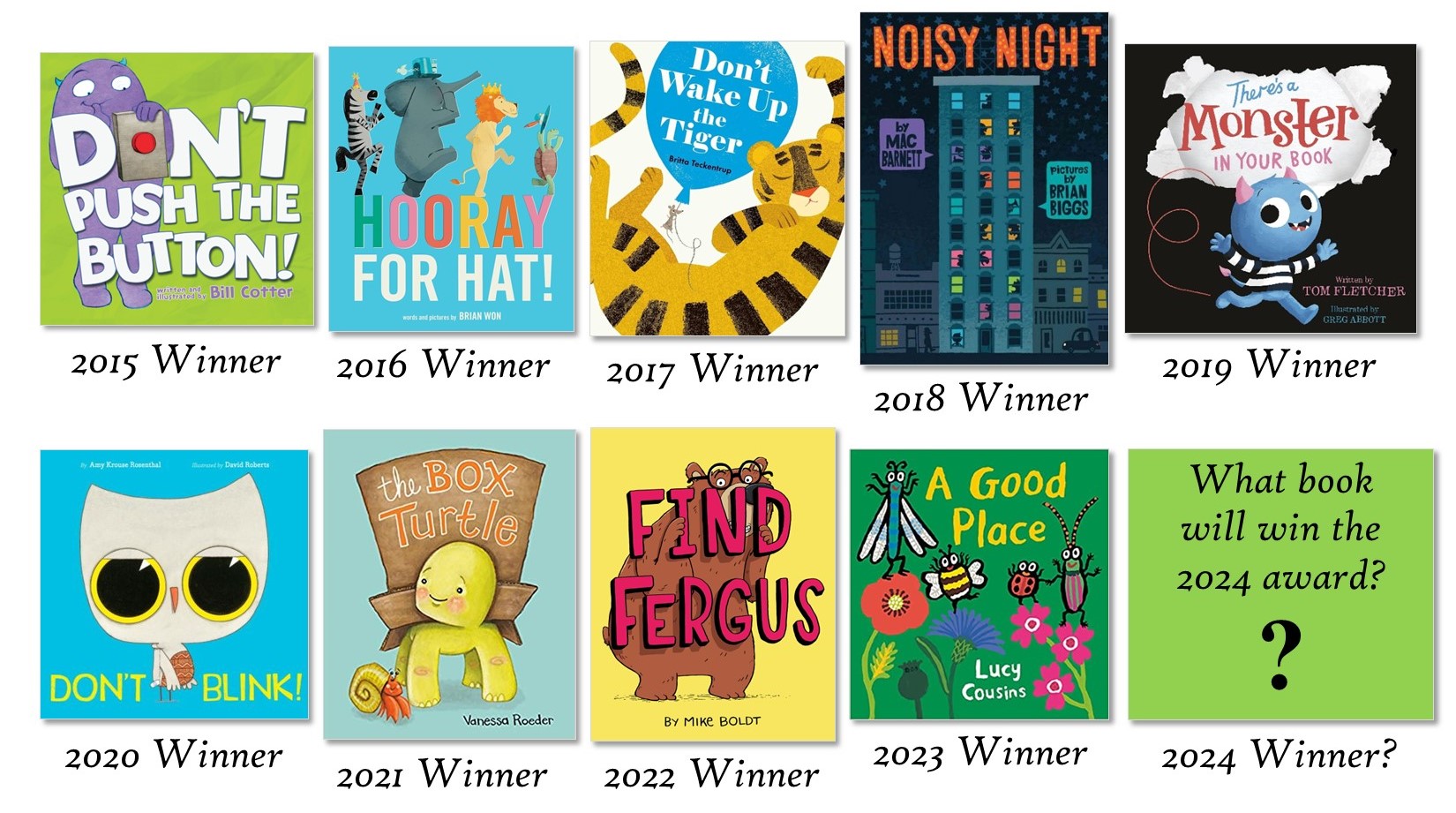
On Oct. 1, 2014, the Indiana Center for the Book announced their new Indiana Early Literacy Firefly Award in the Indiana State Library’s weekly newsletter, the Wednesday Word. Later in 2015, the first book to win the award was announced. In the first year of the award, over 1,200 Indiana children ages 0-5 voted on one of eight books nominated by Indiana librarians and selected by the Indiana Early Literacy Firefly Committee as being worthy of consideration for this award. The first year, the book “Don’t Push the Button!,” written and illustrated by Bill Cotter, took home top honors and won the award. Each year since, a different book has won the award, based on votes from Indiana children, ages 0-5.

Some things about the award have changed. Starting in the second year, only five books appeared on the ballot, as it was determined that young children could more easily choose from a group of five books versus a group of eight. During the pandemic, remote voting was added. Also, starting in 2018, the Firefly Committee began creating program guides to go along with the award, providing parents, caregivers, teachers and librarians with dozens and dozens of developmentally appropriate activities to support each title appearing on the ballot. The program guide is what sets the Indiana Early Literacy Firefly Award apart from other state book awards.
This year’s program guide includes songs, book lists, rhymes, magnet boards, full-body activities, fine-motor activities and much more to support the program and encourage parents and caregivers to not just read the books, but to immerse their children in activities about the books.

Since the award’s inception, over 27,000 votes have been cast for the Indiana Early Literacy Firefly Award. This year, the committee is hoping for another crop of votes from young children, ages 0-5 to usher in the next 10 years of the award. Of course, it is assumed that children ages 0-5 will need assistance in casting their ballots. Some libraries provide voting programs where children each get a bean bag that they put directly on the cover of their favorite book. Other libraries provide ballot boxes that parents can use to log their child’s vote. No matter what book wins, everyone wins when they participate in the Indiana Early Literacy Firefly Award. Why? Because it’s just the cutest book award in the land.

Voting for this year’s award is now open. Votes can be submitted online through the remote voting form or can be submitted through any local library in Indiana that is participating in the award.

The 2024 nominees are as follows:

  • “Bear Has a Belly” by Jane Whittingham.
  • “Firefighter Flo!” by Andrea Zimmerman.
  • “Let’s Go Puddling!” by Emma Perry.
  • “I Was Born a Baby” by Meg Fleming.
  • “One, Two, Grandpa Loves You” by Shelly Becker.

For more information about the Indiana Early Literacy Firefly Award, reach out to Suzanne Walker, director of the Indiana Center for the Book.

This blog post was submitted by Indiana Young Readers Center librarian Suzanne Walker.

Indiana authors spotlight 

I love books! As a librarian, that probably doesn’t surprise anyone. I credit my love of books to my mom. She began reading to me as a baby. By the age of two, I had my Little Golden Books memorized and could “read” them to myself. I was very proud to be the only kindergartner that already had a well-loved card when we went on a field trip to the library to get our first library card. Long before I decided to pursue a career as a librarian, I knew I wanted to be writer. I had stories to tell, like all my favorite authors!

I can’t remember I time that I wasn’t writing. A notebook and pen graduated to a typewriter, then to a desktop computer and now a laptop. Five years ago, I decided to get serious about making my dream of holding in my hands a book that has my name on the cover a reality. I had no clue how to accomplish that. I turned to posting my work on platforms like Wattpad and Archive of Our Own and building up a community of support. The friendships that I cultivated gave me the courage to take that next step, self-publishing, but I still didn’t have a clue. Thankfully, I had a friend from high school that knew what she was doing and lead me on my journey to publishing my first book.

What a journey it has been! One of my favorite parts has been participating in local author fairs at libraries and other events around Indiana. Not only have I met some amazing readers, but many wonderful Indiana authors. I’m excited to cast a spotlight on three of these authors in this article.

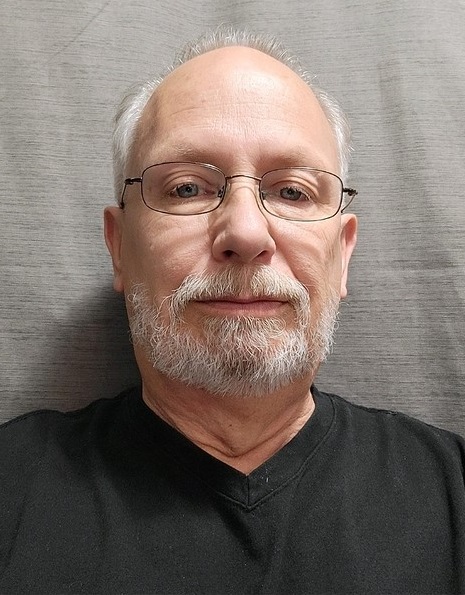
Ben Oneal

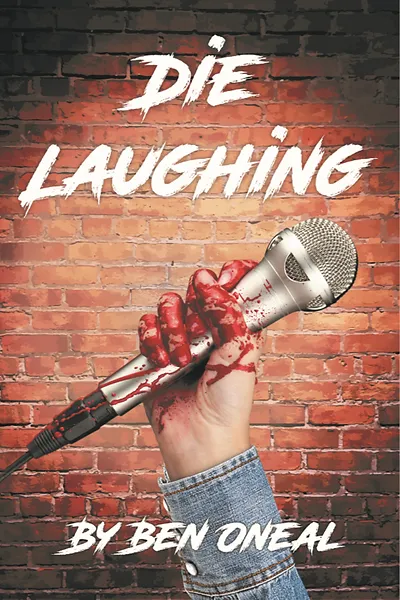
Ben Oneal is the author of The Benjamin Kroh Series, The Serpent’s Gift Series and multi-genre short stories. Oneal started writing down his thoughts in his early 20s, but it wasn’t until he was older that he decided to get serious about turning those thoughts into books. His favorite part about being an author is the storytelling and sharing his stories with the world. Oneal tried in the beginning of his career to traditionally publish but soon decided to self-publish.

The Benjamin Kroh Series books are crime thrillers that follow Agent Benjamin Kroh of the FBI’s Behavioral Analysis Unit as he tracks down serial killers in various parts of the country. The first book finds him in Central, Indiana. For this series, Oneal said that he has always been interested in why people do the things they do. When he worked at General Motors in Anderson he worked with the man that was dubbed the Indiana Bluebeard. He killed his mom, probably his dad and three wives. Oneal actually dated the sister of the third wife that Bluebeard killed. That caused an interest in the mindset of serial killers.

For The Serpent’s Gift Series, Oneal was inspired by his love of the game “What If” to fuel the words that poured from his mind. For his short stories he was able to explore genres that did not lend themselves to novels. Oneal has had a lot of fun exploring the genres of horror, environmental, romance, and many more.

For more information on Ben Oneal, check out his website.

Mark Edward Langley

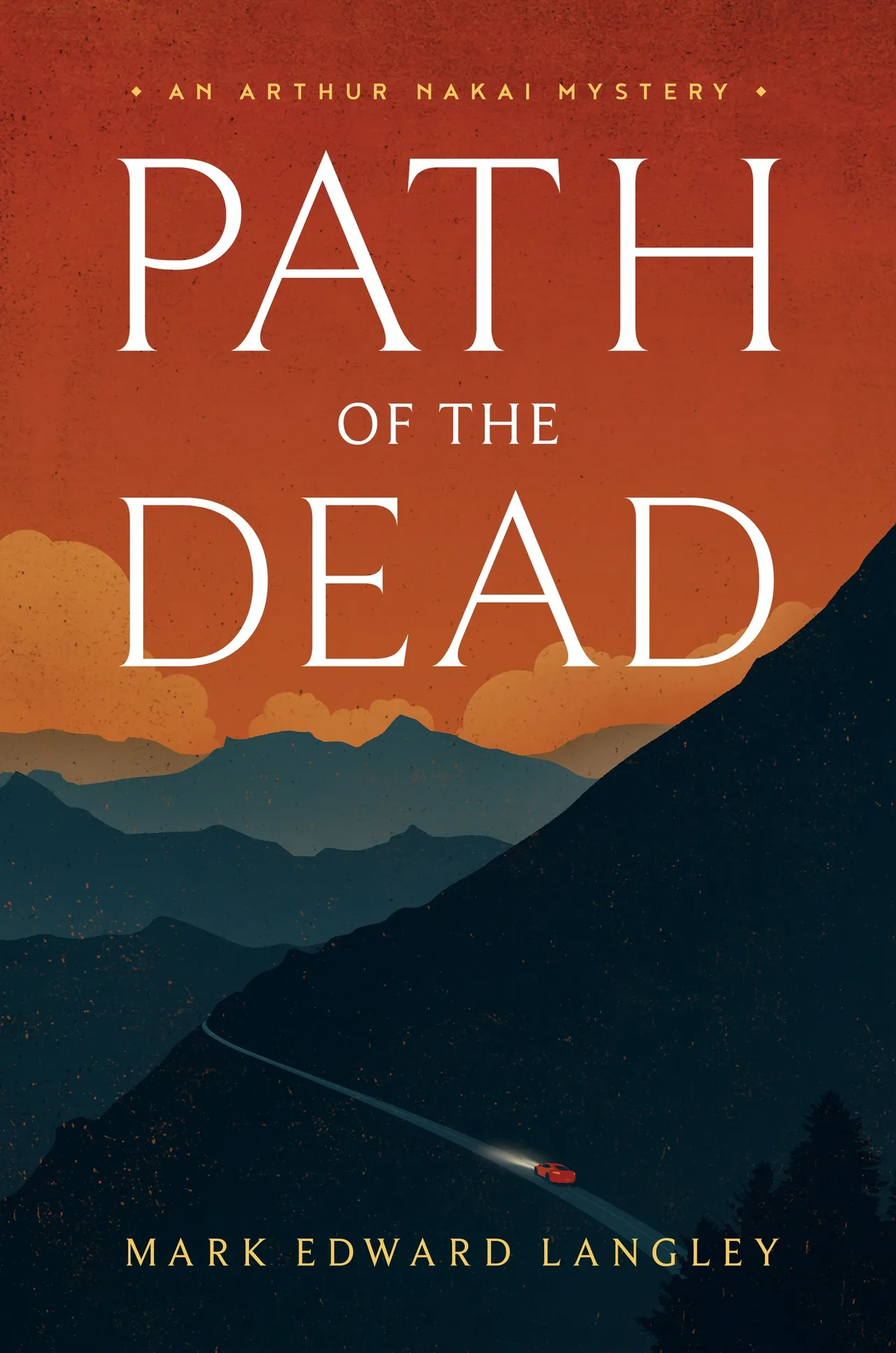
Mark Edward Langley is the author of the Arthur Nakai Mysteries and The Skye Roanhorse novels. Langley realized he wanted to be an author after reading Robert B. Parker’s Spenser series and Tony Hillerman’s Leaphorn and Chee series. It stirred something inside him that told him this is what he needed to do. His favorite part of being an author is doing the research for each novel. He lives for delving deep enough into finding exactly what he needs to create the novel he is beginning and make his readers feel as though they were a part of it. Langley’s first two books were traditionally published and he then self-published his third book. His latest book, “Bloodlines: A Skye Roanhorse Novel” is being submitted by his new agent to the “big five” publishing houses.

Langley’s novels are contemporary southwestern mysteries. His Arthur Nakai series follows Arthur, who is a former Marine and CBP Shadow Wolf who now runs his own outfitting business in Northwest New Mexico. Between giving tenderfoots back country rides, he focuses on helping the Navajo people where they police and FBI cannot.

The Skye Roanhorse novels follow Skye Roanhorse. Roanshorse is a man with a troubled past. Three years ago, as the result of an officer involved shooting, he lost not only his position as a sergeant in the New Mexico State Police, but also his family and, ultimately, himself. Two-and-a-half years later, after being given a second chance by his close friend and deputy director of the New Mexico Livestock Board, Troy Riggs, Skye is assigned to remove three horses from a crime scene where a Hopi elder was found murdered. A few days later and 50 miles from that location, a prostitute is found murdered in the same way. Putting the elements of those two cases together Skye begins to put the facts together and comes to believe the murders may have a somewhat darker connection to the death of a renowned horse racing trainer in Santa Fe. As he navigates the facts of the three cases, his old intuitions and instincts reignite, leading him to reveal the killer’s identity and an even bigger revelation. “Bloodlines: A Skye Roanhorse Novel,” book one, is coming out this year.

For more information on Langley’s books, check out his website.

Amy Brailey

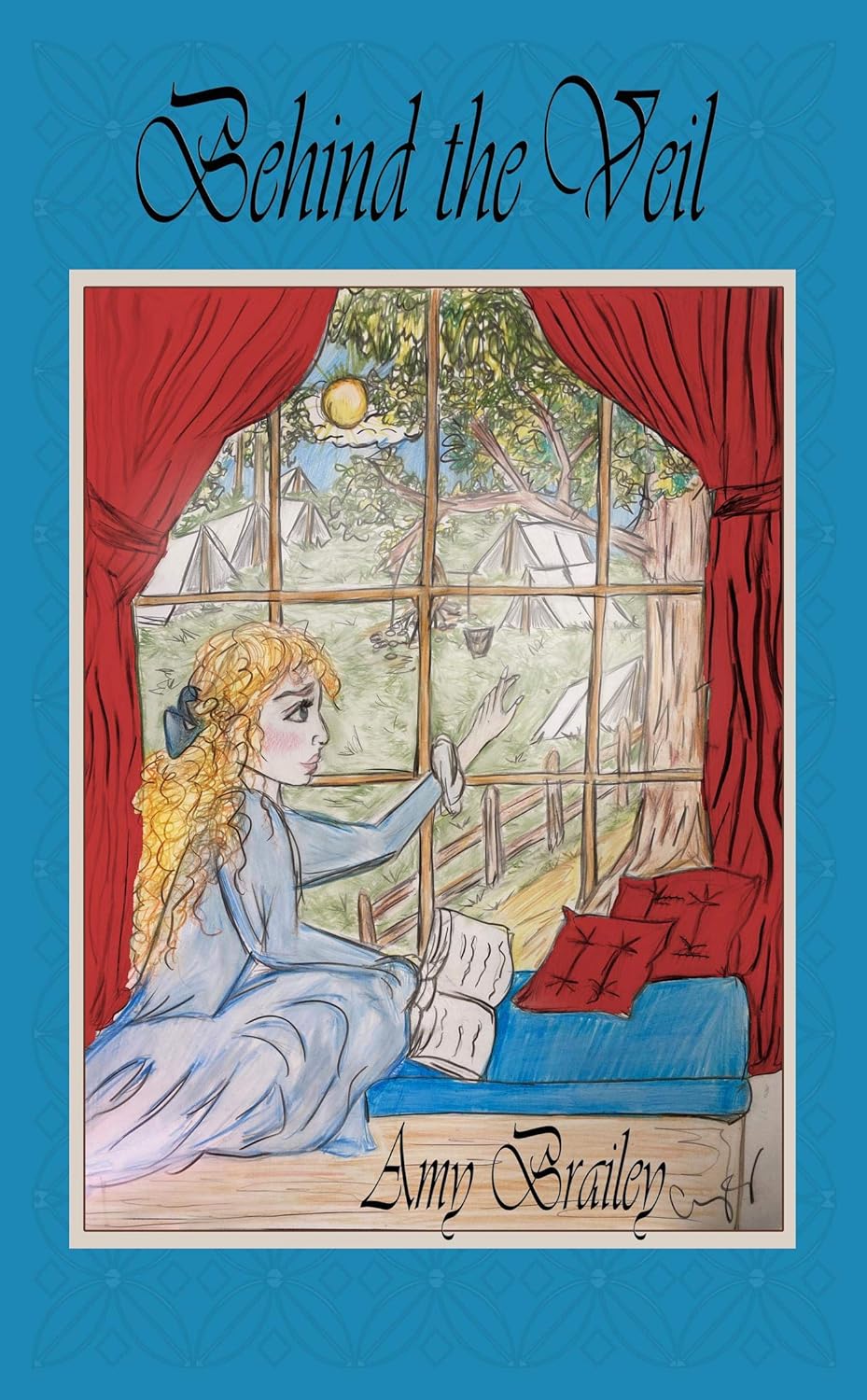
Amy Brailey is the author of The Ideal Courtship Trilogy, a young adult series. Brailey won her first author contest in fourth grade and was able to go to the Young Author’s Conference. It was an amazing experience, and really fueled her love of writing. She’s always been a reader and thinks that being a reader and writer, to a degree, goes hand in hand. Brailey’s favorite part of being a writer is hearing from readers about how her books have impacted them. Brailey says that it is an amazing experience when readers share something meaningful or connects to her writing in an emotional way. There is truly nothing like it when readers take the extra time to share their experiences with her.

When Brailey decided to publish, she did consider traditional publishers, but when friends who were published shared how editors had changed the words and intent of their writing, she decided the message of the series was too important for someone else to have any control over. She does have future projects in mind that she would consider publishing traditionally because she isn’t tied to specific wording. For her, it will be a book-by-book decision.

Brailey got the idea to write The Ideal Courtship Trilogy when an eighth grader in her class was pregnant. It was around the time when all the young adult books like “Twilight,” “Hunger Games” and “Divergent” were coming out. All portrayed romance as making out in bed and in the books that is where it ended. In real life, not so much. She felt society was in part to blame for presenting that concept of romance to young girls. She wanted to write something romantic that wasn’t so sexual and really looked at our choices.

Brailey’s other books include a book about George Washington in the French Indian War that she wrote for boys who aren’t interested in history. She also wrote a parallel Shakespeare for use by teachers. She has a collection of “finish the stories” she’s working on for English teachers to use to prompt Free Write Fridays. Additionally, she is working on a collection of the hilarious and true things junior high students have said. The Ideal Courtship series is the only one currently out – she’s finishing the third book in that series – and then she will have time to pursue getting the others out there.

For more information on Brailey’s books and future projects you can follow her on Facebook.

I had a chance to ask each author this question, “What advice would you give an aspiring author?” This is how they replied.

Ben Oneal: “Keep writing. Believe that what you have to say, is important. Find an editor that you trust. One that will not just tell you what you want to hear but will edit your work in the most professional way possible. You may have the greatest story the world has ever known, but too many mistakes turn off even the most loyal reader. Just put your heart and soul into your words, trust your editor and keep writing.”

Mark Edward Langley: “Never give up. It is your dream; your goal. Do not let anyone talk you out of living it. Also, know that even if you have an agent and a publishing house, it is still up to you to market your book. Find a qualified publicist and let them promote your novel.”

Amy Brailey: “Write the books you want to read. John Green talked about the fact that you don’t write for everyone. You write for a specific group that will love what you do. I’m paraphrasing; his quote is better. But, I agree. Not everyone will like what you write. But, for those that do, it will dramatically impact them. Most importantly, write for yourself. Write because you have a voice and something to say. Write what you’re passionate about. And I’m cheering for you!”

To find more Indiana authors and their books visit, Indiana State Library: Indiana Center for the Book.

This blog post was submitted by Lacey Klemm, Northwest regional coordinator in the Professional Development Office of the Indiana State Library.

2023 National Book Festival – Indiana’s involvement

The Library of Congress is once again presenting the National Book Festival, and Indiana is excited to be part of it. The 23nd running of the festival will take place in-person on Aug. 12 at the Washington Convention Center. A selection of programs will be livestreamed, and videos of those presentations can be viewed online after the festival concludes. The theme for this year’s festival is “Everyone Has a Story.”

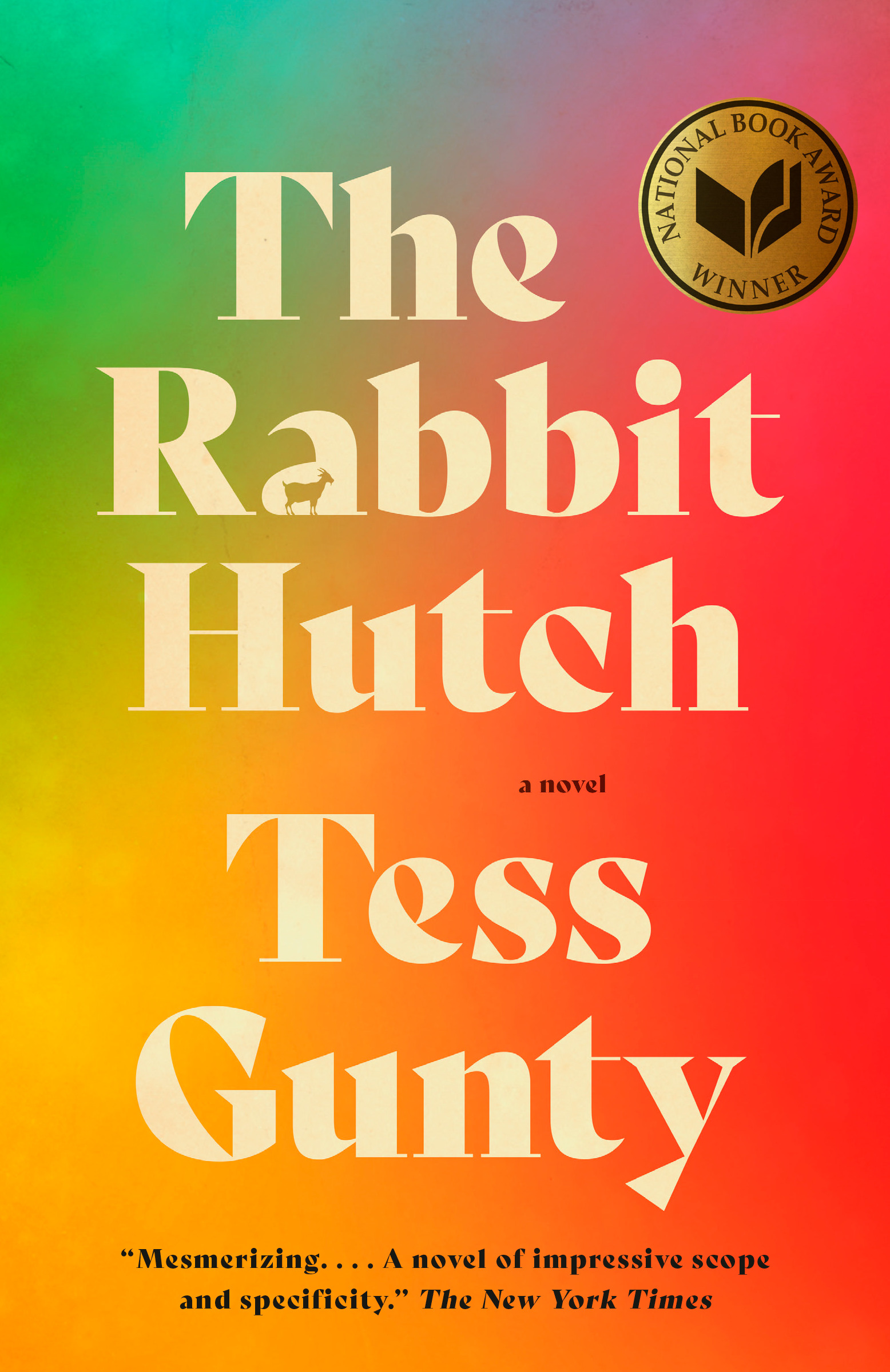
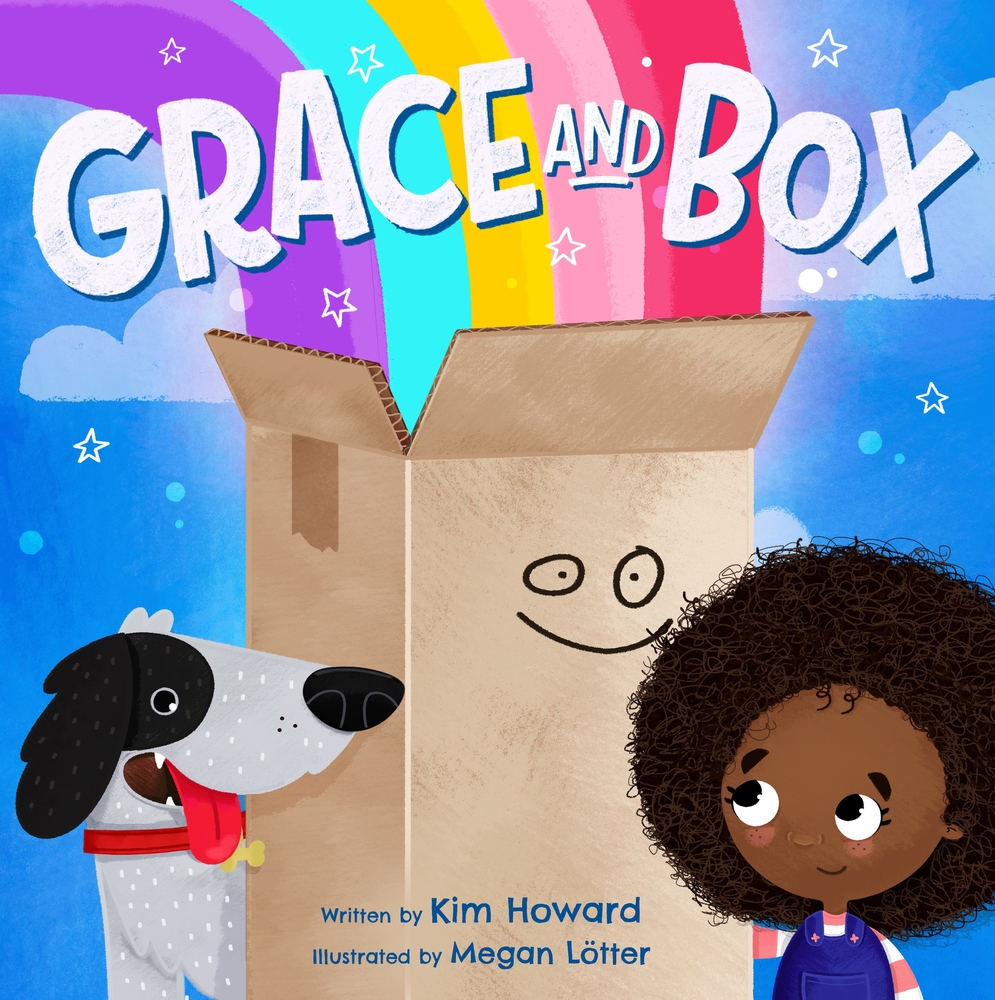
Indiana is participating in the festival in a variety of ways. The Indiana Center for the Book will staff the Indiana booth in the Roadmap to Reading area of the festival, and two books by Indiana authors are being highlighted at the festival as part of the Great Reads from Great Places initiative. “The Rabbit Hutch” by Tess Gunty is the selection for adult readers and “Grace and Box” by Kim Howard is the selection for youth readers.

The Indiana Center for the Book is partnering with Indiana Humanities to host a program with Tess Gunty in-person on July 17. You are welcome to join Indiana Humanities and the Indiana Authors Awards for a conversation between National Book Award winner Tess Gunty and Indiana author Susan Neville at the Indiana Landmarks Center on Monday, July 17 at 6:30 p.m. Eastern. The event is free but registration is required.

“Grace and Box” won the Indiana Authors Award in the Children’s category in 2022 and was also nominated for the Indiana Early Literacy Firefly Award in 2022.

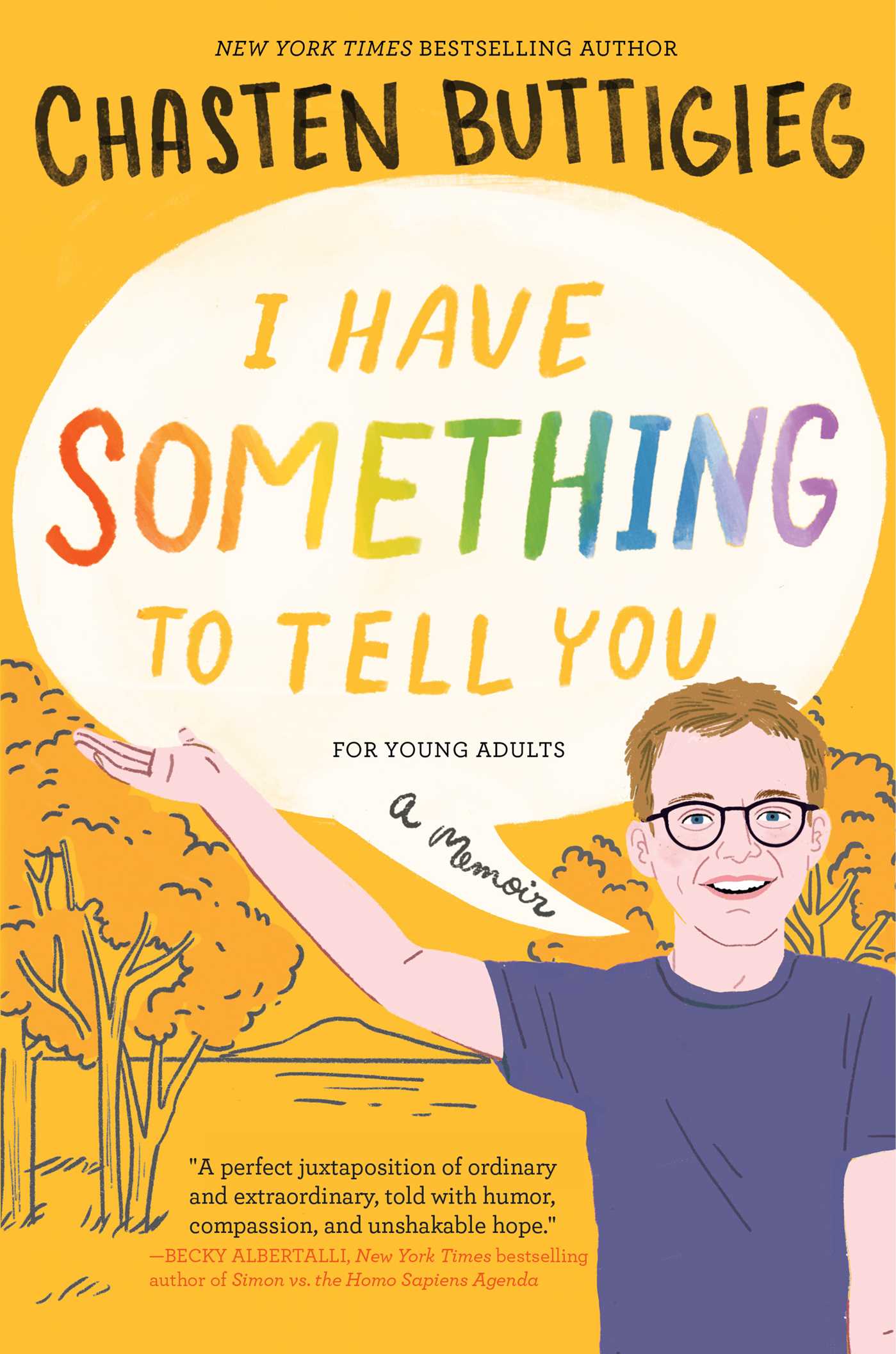
In addition to these two authors, Indiana author Chasten Buttigieg will also be at the festival in-person. Buttigieg’s book “I Have Something to Tell You – For Young Adults: A Memoir” is featured in a program guide put together by Indiana Humanities and Indiana Center for the Book. Use the program guide to participate in the festival. Explore the writings of one of the authors. Learn more about the Library of Congress, our national library. Listen to a podcast interview in a group and discuss it afterwards. Above all, enjoy connecting with Hoosier literary heritage.

This blog post was submitted by Indiana Young Readers Center librarian Suzanne Walker.

Indiana participates in the 2022 National Book Festival

The Library of Congress is once again presenting the National Book Festival, and Indiana is excited to be part of it. The 22nd iteration of the festival will take place in-person on Sept. 3 at the Washington Convention Center. A selection of programs will be livestreamed, and videos of those presentations can be viewed online after the festival concludes. The theme for this year’s festival is “Books Bring Us Together.”

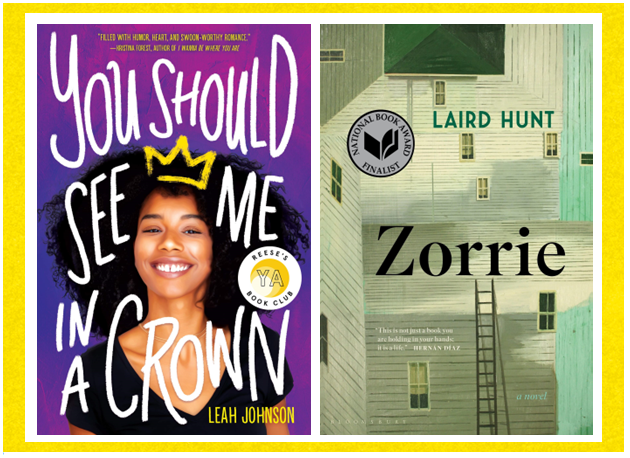
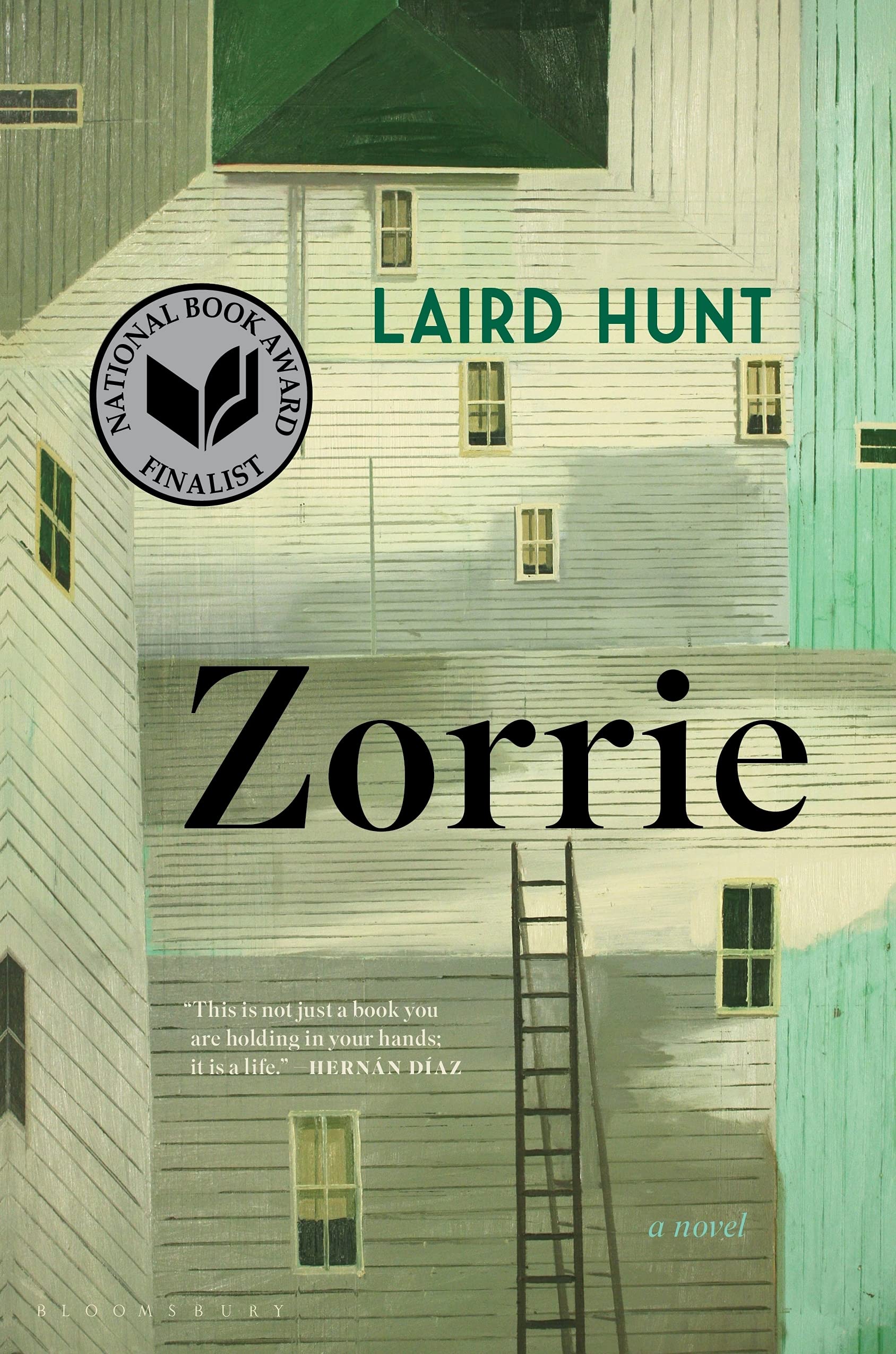
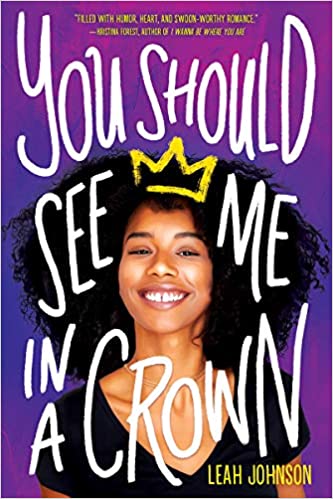
Indiana is participating in the festival in a variety of ways. The Indiana Center for the Book will staff the Indiana booth in the Roadmap to Reading area of the festival, and two books by Indiana authors are being highlighted at the festival as part of the Great Reads from Great Places initiative. “Zorrie” by Larid Hunt is the selection for adult readers and “You Should See Me in a Crown” by Leah Johnson is the selection for youth readers.

The Indiana Center for the Book recently hosted an evening with Laird Hunt where Suzanne Walker, director of the center, spoke to the author of “Zorrie” about the novel and especially about the author’s Indiana roots. “Zorrie” is unique because it was chosen to represent two states at the festival. Laird Hunt is from Indiana, but currently lives in Rhode Island, and the Rhode Island Center for the Book partnered with Indiana on the event and has also chosen the book to represent their state at the festival.

Leah Johnson, author of “You Should See Me in a Crown” was interviewed back in 2021 by Sammy, the toucan puppet affiliated with the Indiana Center for the Book. They talked about books, reading, and of course, being from Indiana.

In addition to these two authors, Indiana author Karen Joy Fowler will also be at the festival in-person. Fowler’s book “Booth” is featured in a Toolkit put together by Indiana Humanities and Indiana Center for the Book. Use the toolkit participate in the festival. Explore the writings of one of the authors. Learn more about the Library of Congress, our national library. Listen to a podcast interview in a group and discuss it afterwards. Above all, enjoy connecting with Hoosier literary heritage. The Golden Age of Indiana literature isn’t in the past. It’s beginning all over again.
This blog post was submitted by Indiana Young Readers Center librarian Suzanne Walker.

‘An Evening with Laird Hunt,’ author of ‘Zorrie’

Join the Indiana Center for the Book and the Rhode Island Center for the Book for “An Evening with Laird Hunt,” author of the 2021 National Book Award finalist, “Zorrie.” This title is being featured by both Indiana and Rhode Island at the National Book Festival. “Zorrie” tells the story of one Hoosier woman’s life convulsed and transformed by events of the 20th century, specifically the Great Depression. Set in Clinton County, Indiana, Zorrie is orphaned twice, first by her parents and then her aunt. She ekes out a living, eventually finding work in a radium processing plant in Illinois. However, when Indiana calls her home, she returns and works to build a new life, yet again. Laird Hunt’s novel is a poignant study in rural Midwestern life and an exploration of the passage of time through individuals and communities. Join us to learn more about the author and this fascinating novel.
  • Date: Aug. 2, 2022
  • Time: 7:00 – 7:45 p.m. Eastern
  • Location: Zoom
  • Cost: Free of charge

Participants must register online. Registered participants will be sent a Zoom link upon registration. The event will be recorded and will be available on the Indiana State Library’s YouTube channel in the days following the event. This program is eligible for one LEU for Indiana library staff.

About Laird Hunt
Laird Hunt is the author of eight novels, including the 2021 National Book Award finalist “Zorrie.” He is the winner of the Anisfield-Wolf Book Award for Fiction, the Grand Prix de Littérature Américaine, the Bridge Prize and a finalist for both the Pen/Faulkner and the Prix Femina Étranger. His reviews and essays have been published in the New York Times, the Washington Post, the Wall Street Journal, the Daily Beast, the Guardian, the Irish Times and the Los Angeles Times, and his fiction and translations have appeared in many literary journals in the United States and abroad. A former United Nations press officer who was largely raised in rural Indiana, he now lives in Providence, Rhode Island where he teaches in Brown University’s Literary Arts Program.

This blog post was submitted by Indiana Young Readers Center librarian Suzanne Walker.