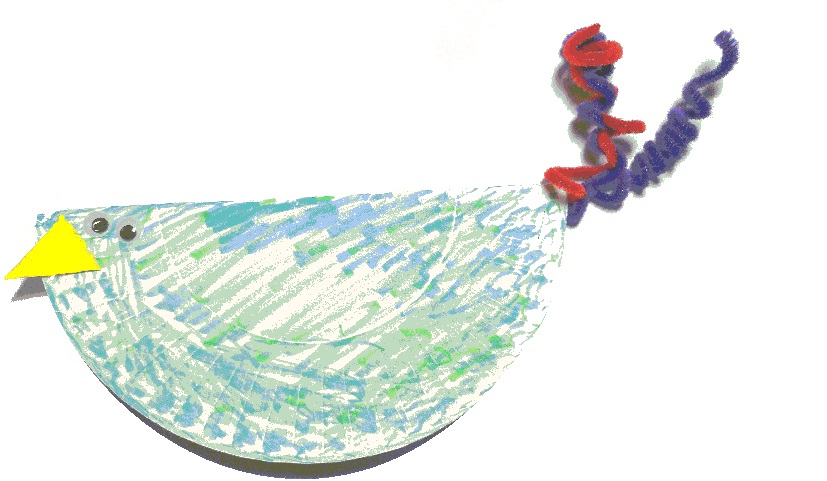
Celebrate Earth Day with activities inspired by Indiana picture books

Earth Day has been observed every year in April since 1970. That’s 50 years of celebrating the planet we all call home. It might feel difficult to celebrate Earth Day this year because of COVID-19, but here are two activities that everyone can do, inspired by two Indiana picture books.

Take a walk and look for native Indiana plants
“Wake Up, Woods,” published by Indiana’s Rubber Ducky Press in partnership with the Indiana Native Plant Society, is a beautiful picture book all about Indiana native plants. The book pairs lilting rhymes with informational text about 12 plants native to Indiana. The book is illustrated with delightfully accurate drawings of not only the plants, but also the creatures who live in and around the plants. On the cover a mouse, caterpillar and bee coexist among violets.

For this activity, all you need to do is step out of your home and take a little walk. You can do this on your own or with members of your household. Keep your eyes to the ground and look for violets, spring beauties or any other Indiana native plant. Violets are probably the easiest to identify because of their distinctive flowers and heart shaped leaves. The flowers can be violet in color, white or even yellow. Take a closer look and observe their petals. They have two top petals, two side petals and one bottom petal. Violets are relatively easy to find because they like to grow in a variety of soils and could even be found on the edges of parking lots. For more information about Indiana native plants, take a look at the Indiana Wildlife Federation’s lists and resources.

Write a thank you note to the earth
“Thank You, Earth,” written by Indiana author April Pulley Sayre, pairs glorious photographs with a simple sentiment: a thank you letter to the earth. As the pages turn, the reader experiences rich vocabulary while taking a visual tour of the world, including several images of Indiana like a redbud tree and a blooming bloodroot plant. The back matter at the end of the book describes several ways to write a letter of thanks to the earth, and where to send it.

For this activity, all you need is a piece of paper. Write a letter to your planet, thanking it for the air you breathe, the blue sky and the water you drink. If you have children in your household, get them involved, too. Instead of writing a letter, make a poster and hang it in a window so passers-by can enjoy the sentiment as well. Mail your letter to your local newspaper or radio station.

Indiana has many authors who have written picture books that celebrate the earth. Take a look at some of these authors for more information:

Rebecca Kai Dotlich
Helen Frost
Phyllis Root
April Pulley Sayre
Lola Schaefer

This blog post was submitted by Indiana Young Readers Center Librarian Suzanne Walker.

River city maps

Town maps can certainly be beautifully done, but they are at the mercy of the grid of streets to give them visual interest. Throw in a variable, like a winding river, and they become ever more interesting. The way the water meets the land and how a town is forced to bend along the banks adds lines and color to the maps. Where waterways meet cities the grid breaks down and leaves behind some visually rich maps.

Sometimes the river makes the city, both in development and in character. Indiana’s most famous river city is probably historic Madison, along the mighty Ohio River. Kentucky is usually omitted from maps, making it look like the town is situated at the edge of a cliff. The river is impossible to ignore there.

Likewise, Huntington was built up along a river. The Wabash, Little Wabash and the canals; waterways were ever important to its development. The maps are beautiful in the way the angled streets disorient the buildings. Especially lovely with the illustrations is this detailed map from 1879.

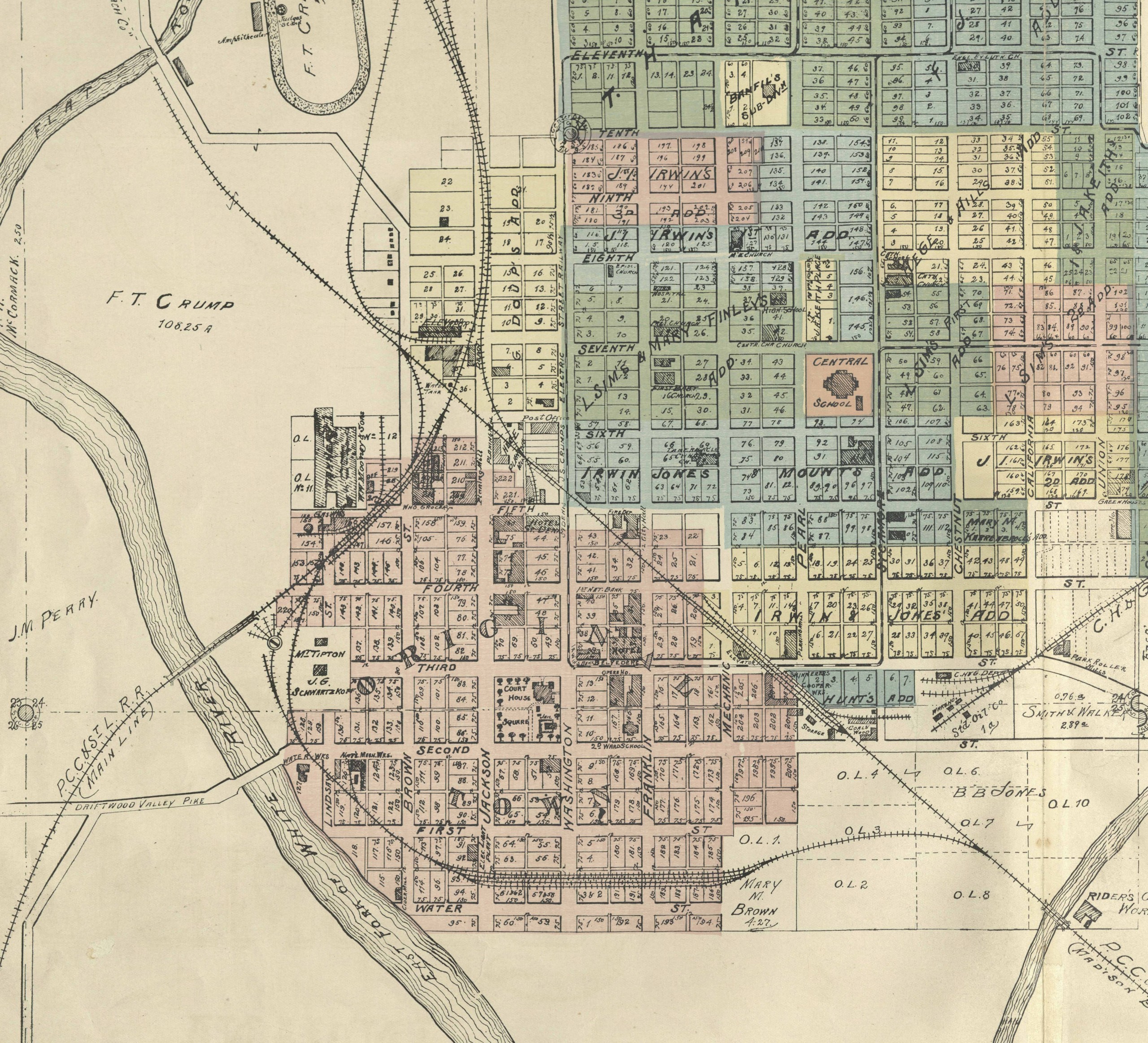
Other times, the city seems to develop while almost ignoring the river. Columbus seems to just dip a toe into the East Fork of the White River. Indianapolis, too, seems to be shying away from the White River and looking inward toward the circle center. Both of these towns have had interesting relationships with their rivers, but now Columbus Riverfront and Indianapolis are looking for ways to embrace their beautiful waterways.

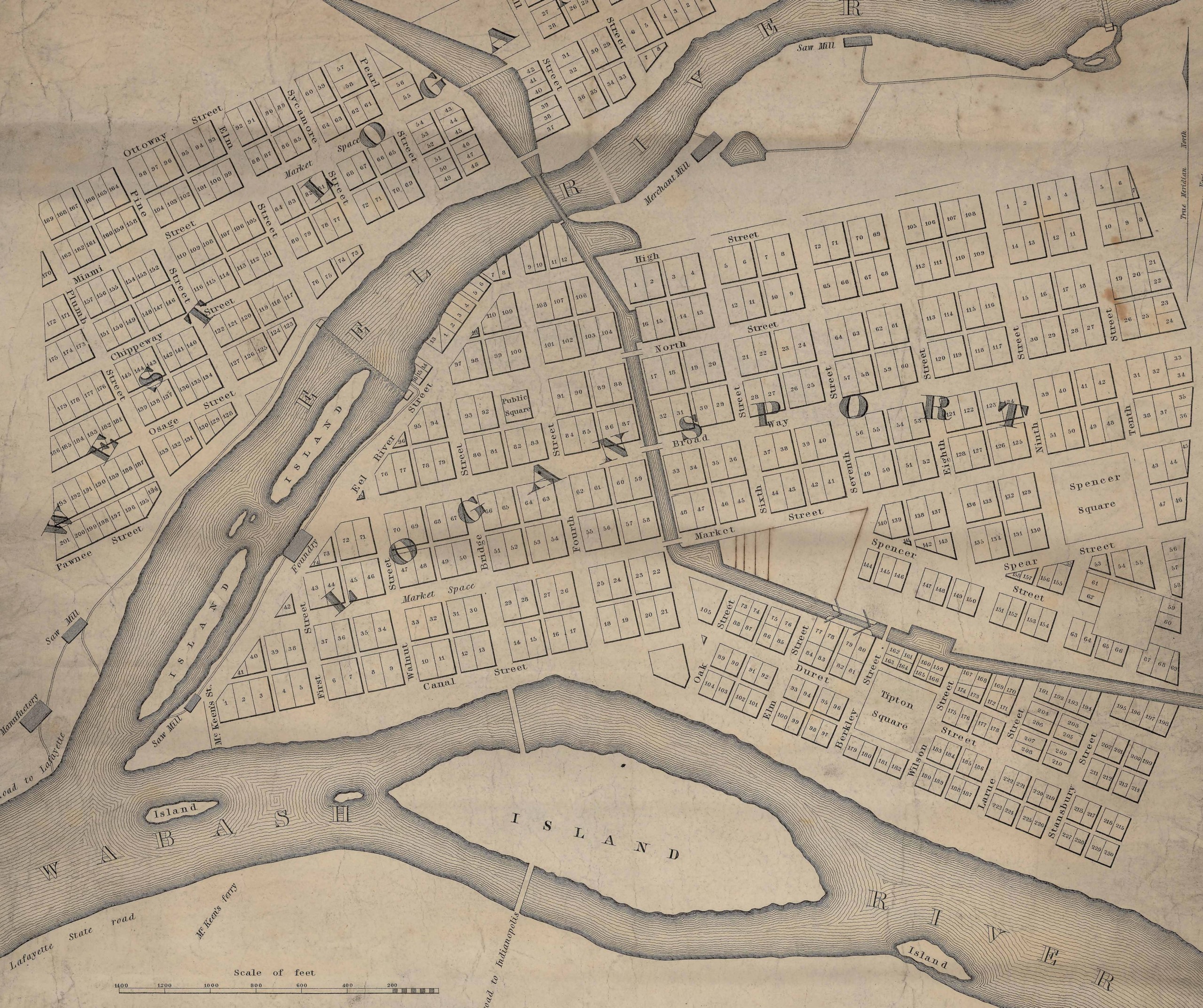
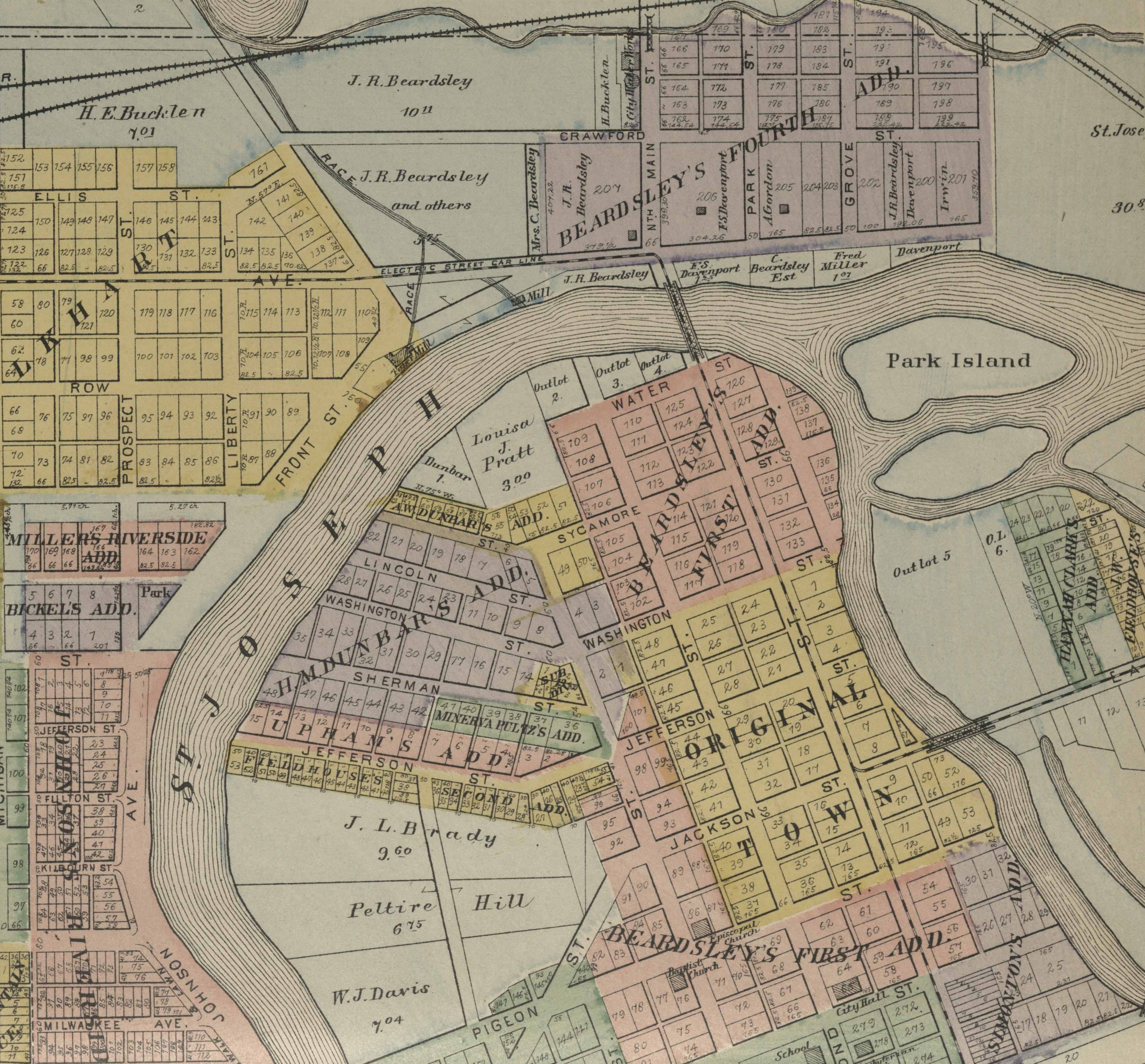
It seems Logansport’s not afraid to straddle and nestle within the arms of the Wabash and Eel rivers. And Elkhart, too, appears not to have shied away from the St. Joseph and Elkhart Rivers. The river seems to be coming and going, swirling and whirling on the page.

If you enjoyed looking at these maps, take time to explore some of the great digital map collections available online. Don’t we all need something for our minds to linger on right now?

David Rumsey Historical Map Collection
American Geographical Society Library
Osher Map Library
New York Public Library

This post was written by Indiana Collection Supervisor Monique Howell

Considerations for reopening if the library board or staff still have concerns

Once the current COVID-19 public health emergency is over and the executive orders limiting movement have expired, some library board members or staff could still have concerns. It is imperative that if additional restrictions remain in place, the library enforce those restrictions universally. Some of the things a library could continue to do to encourage social distancing for the public without risk of legal recourse are as follows:

1. Rearrange or remove some of the seating to limit how many people are congregating in the seating areas and to keep the tables spread a good distance apart from each other. This might draw some criticism from taxpayers but would not be discriminatory if seating was first come first serve.

2. Meeting room reservations by the general public could technically continue to be temporarily or even permanently discontinued. Neither the law nor public library standards require libraries to provide meeting rooms. Again, this is a move that might draw criticism but wouldn’t be discriminatory if no one has access except the library staff or board.

3. Libraries could continue to request patrons stand six feet apart at the check out and reference desks by marking the floors with tape – or something else – and posting signs, similar to what retail stores are doing. Requiring everyone to do that is not discriminatory. Family members and small groups that come in together should not be required to be separated from each other.

4. Libraries can use plastic sneeze shields at the check out and reference desks to protect staff from patrons similar to what the retail stores are doing. This seems impersonal but would be a non-discriminatory safety measure.

5. Libraries could rearrange their computer areas to provide some distance between each terminal. However, if rearranging isn’t practical, they could have only every other computer terminal operational to force some distance between the users and perhaps limit the amount of time each user may be on the computer. Computer users can put their name back on the waiting list to have another turn if they don’t complete what they need to do on the computer the first time. The library could sanitize the terminals between users.

6. Libraries could limit story time and other programs to X number of people, first come first serve and make sure they are holding the programs in a large enough space that individuals are not on top of each other, and so on. Maybe those turned away because the program filled up could get to be first on the list for the next program. Or, maybe the program is repeated multiple times so everyone can have a chance to attend since smaller groups will be allowed to attend each time. Don’t pass around objects to be touched by multiple people at story time  or programs; continue to keep puzzles and games put away out of reach or require that they be checked out and checked in even while using on the premises so they can be sanitized between users, etc. Capacity limits for story time or other programs should be stated on the program description. For example: “This program is limited to X number of attendees and is first come first serve” or “Attendees may register via X or Y.”

7. Libraries could still post a sign at the library entrance and have a policy requesting that those with communicable illnesses refrain from entering the library. However, trying to kick patrons out if they are coughing or have a runny nose could be problematic for multiple reasons. Library staff don’t know if the patrons might have allergies, asthma, lung disease, cancer, etc. Additionally, with COVID-19 and other communicable illnesses, sometimes the person is contagious before they even show symptoms and sometimes a person may still be coughing after they are no longer contagious.

8. It is possible for libraries to set a lower maximum capacity threshold for their buildings that will allow for six feet between every person in the library to try to prevent against overcrowding but this could be difficult to enforce unless the library stations someone at the door to do head counts of everyone coming in and out. This would obviously draw criticism if people are forced to wait to come in until others have come out but would not be discriminatory if enforced consistently. Libraries will want a policy in place for this and should expect to have to address complaints. This will likely not be a popular move.

Wherever the general public gathers, whether retail or grocery stores, the mall, restaurants, the Bureau of Motor Vehicles or the public library, there will always be some risk of being around others with communicable illnesses. However, as stated above, there are measures that can be taken to help reduce the risk of spread of such illnesses and make public places safer for all.

This blog post was written by Sylvia Watson, library law consultant and legal counsel, Indiana State Library. For more information, email Sylvia.

Working from home, away from the library

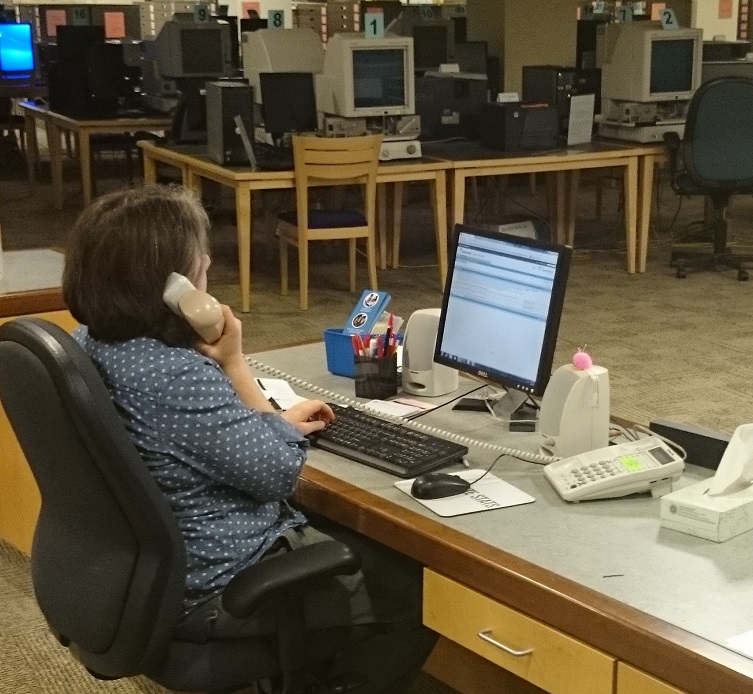
Indiana State Library has been closed to the public since March 16. Public service staff continued to work in the building for another week until Gov. Holcomb issued Executive Order 20-02, a directive for Hoosiers to stay home. Previously, it had already been a strange week without any patrons in the building; just interacting with them over live chat and emails.

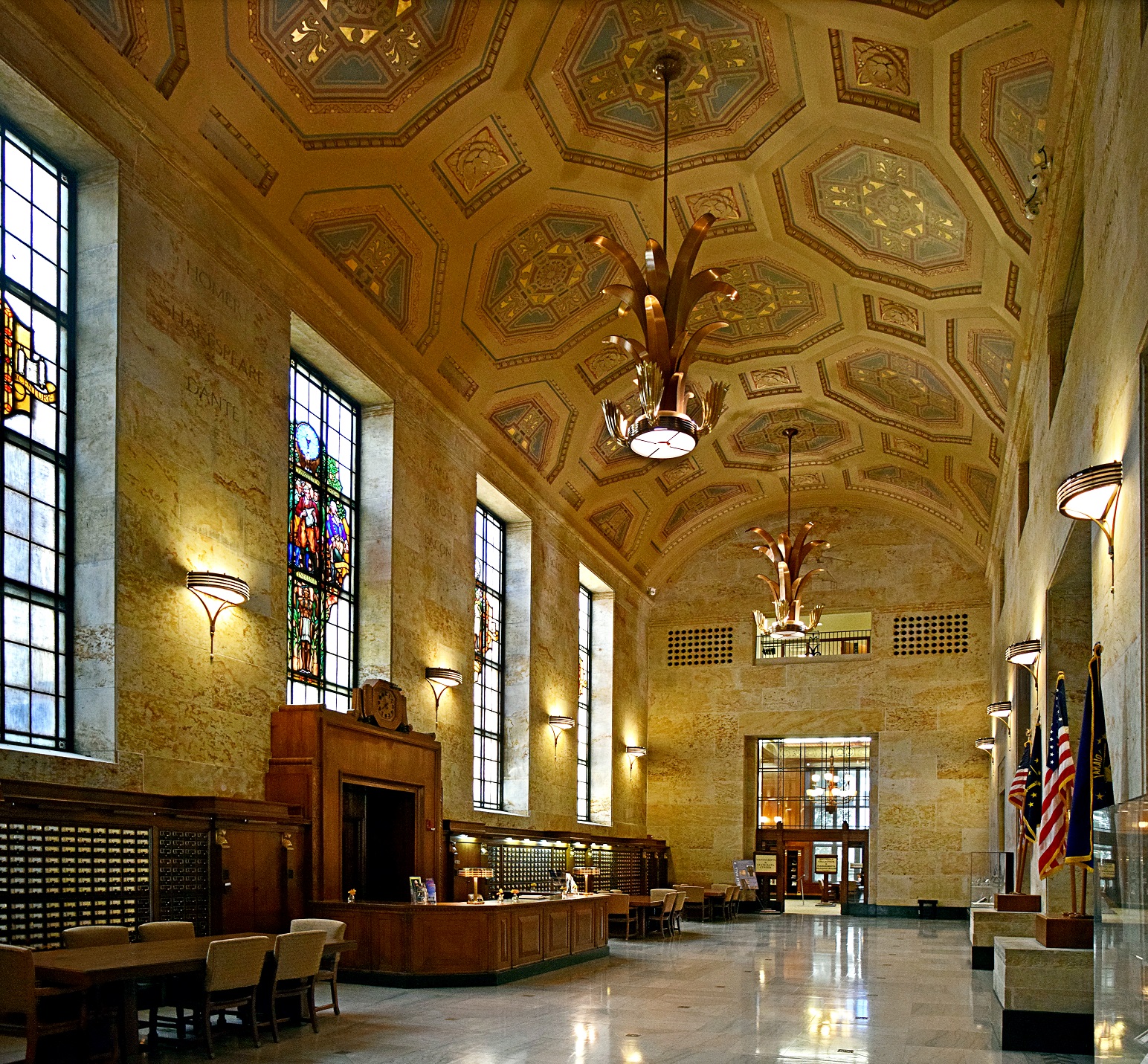
Our building is one of the most beautiful in the state, but it’s designed for lots of people to be there. We also missed our patrons!

On March 23, the state librarian announced that the building would be closed and we would work from home. So, off we went with laptops, instructions on how to access our work electronically and whatever items we thought we might need to continue to serve the public.

Working from home was a new experience to most of us and we realized that we missed each other. If you have never worked from home, it brings both rewards and challenges. After the first week, I polled my colleagues to see what they liked and did not like.  Overwhelmingly, they responded with “did not like” and “I miss the building, the patrons and interacting with my co-workers the most.” While we are still on live chat and available by email and phone, it is the personal interaction that makes being a librarian fun and interesting!

There are many advantages to working from home, but the ones most reported are the “relaxed dress code” and that short commute. One librarian reported, “I have only have a 20-second commute to my home office, and there’s no traffic. Normally, I commute 40-50 minutes one way each day.” Being around family all day has its blessings and its curses. Many people have loved being around their pets and “having the cat sleep on my lap while I do my work,” but one colleague said, “That _ _ _ dog is driving me crazy” – the dog she loves to spoil. Our surroundings can affect our adjustment, too. Many of us work in cubicles at the library, and one librarian said, “My best is having windows in my office. I have sunshine and fresh air and it’s great, but my worst is my decrepit and uncomfortable home office chair that I had already planned to replace in April, but am now stuck with.”

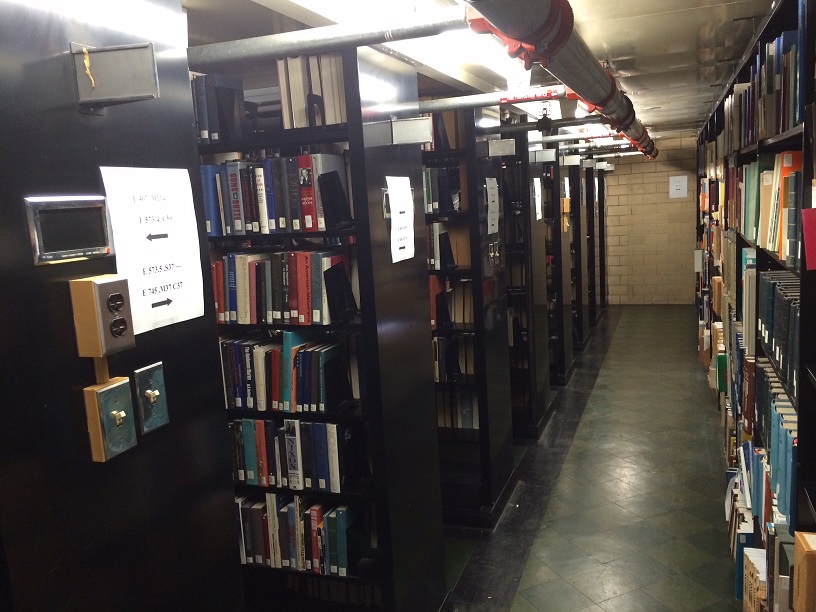
A commonly-reported downside was not having access to printed material. We have a robust digitization program, but the State Library has millions of books, Indiana newspapers on microfilm, one-of-a-kind pamphlet collection and maps that are not available online. Besides needing these for research, many of the staff just miss being around those books.

We have learned some valuable lessons from this necessary quarantine about our work life, our home life and ourselves. One librarian said working from home has forced her into a routine and “gives my life structure so that I do not turn into a complete couch potato.”  Many reported a new appreciation for balancing work and home life and the needs of their families, “having to juggle the demands of two small children with both my spouse’s and my work” and “my best is that I get to interact with my family, spend more time with them, on breaks and throughout the day. It is actually fun, because they are so entertaining.”

For myself, I have learned to appreciate my access to electronic connections and those people who are there to assist me when they do not work, the ready advice from my administration and colleagues about a myriad of issues that come up during the day. I miss the warmth, friendliness and professionalism of the library staff, and of course, just being in the beautiful Indiana State Library building!

This blog post was written by Marcia Caudell, supervisor of the Reference and Government Services Division at the Indiana State Library.

Duplication on Demand – coming soon to Talking Books!

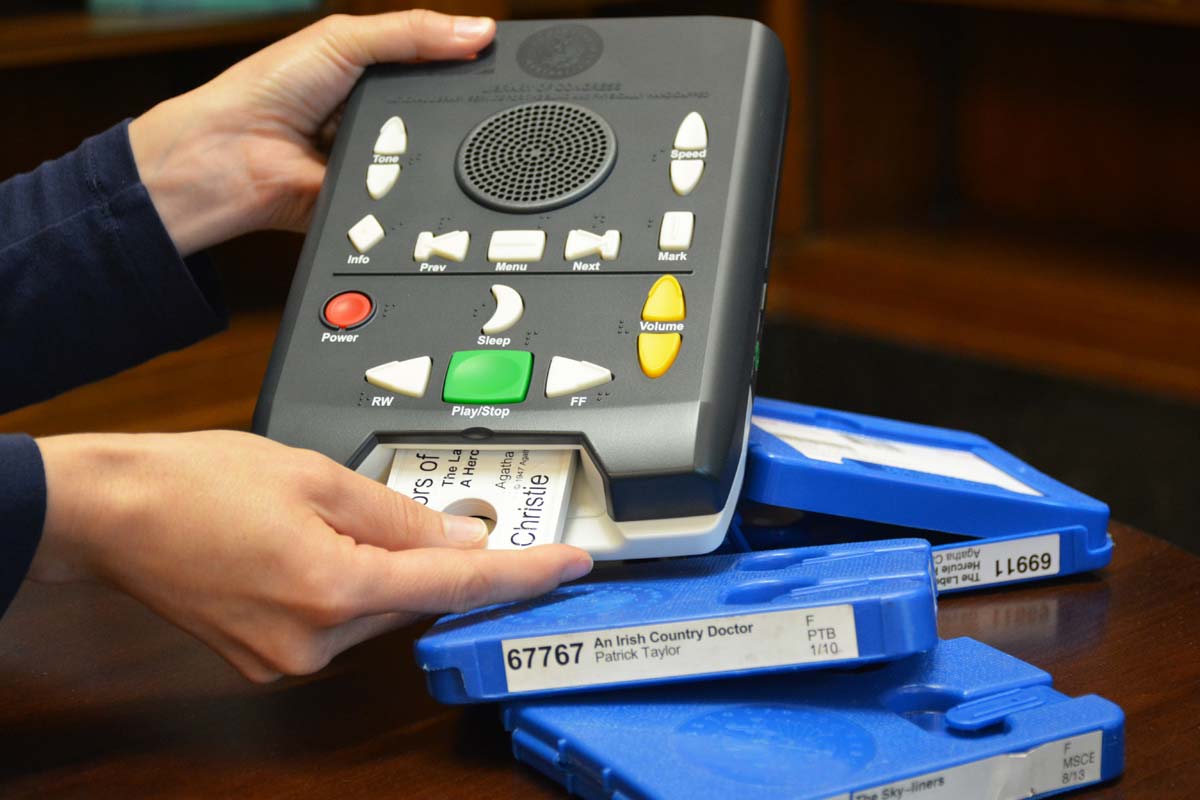
This summer, the Indiana Talking Book and Braille Library will be changing its service model from the current practice of sending patrons one book on one cartridge to Duplication on Demand, which will involve cartridges customized specifically for you with multiple books on each one. The new service will involve the same player and cartridges that we are currently using, but the cartridges will have more books on each one. Your cartridges will continue to come in the same type of container, but the mail card will be foldable and will contain a list of books on the cartridge. When you are ready to return a cartridge, you can throw away the mail card and book list; there is an address sticker on each container that will get your book back to us.

There are many benefits to this change. Currently, our audiobook collection contains thousands of older titles that are only available to download from BARD; these books will now be as readily available to you as new books are. In addition, you’ll now have access to new books faster and will never have to be on a wait list for a popular title. If patrons return their cartridges as they finish them, this will also help with slower mail times.

To access the titles on your DoD cartridges you can either use the player’s bookshelf mode or the sequential play feature. There are instructions for both options below.

While we were initially scheduled to make this transition in April, we now expect it to be delayed a month or two. Please contact us at 1-800-622-4970 if you would like to be among the first patrons to try it.

Sequential Play and Bookshelf
When you have a cartridge with multiple books on it, there are two ways to access the books: sequential play and bookshelf mode. Sequential play will play your books in the order they have been loaded on the cartridge, bookshelf mode lets you pick what book you want to listen to. To use sequential play, you will need to have the latest version of software for your player; it will install automatically when you play your first DoD cartridge. Or you can install it now by downloading it directly from NLS.

To use the sequential play feature, you put your cartridge in and listen to the first book as usual. At the end of the book, let the closing announcements play; when they are finished a voice will say “end of book, press play/stop to go to the next book”. Press the play/stop button and the next book on the cartridge will begin playing. Repeat this step until you have listened to all of the books.

To use bookshelf, turn your player on and put the cartridge in. Next, hold down the green “play/stop” button for ten seconds, or until your player beeps and says “bookshelf mode.” Once in bookshelf mode, you can use the fast forward and rewind buttons to scroll through the books or magazines recorded on the cartridge. When you have located the item you wish to read, press the green play/stop button again and it will start to play. Repeat the process for each item on the cartridge.

This blog post was written by Maggie Ansty of the Indiana Talking Book and Braille Library. 

7 ways to cope during tough times – from someone who’s been there!

Today we welcome guest blogger Jenny Kobiela-Mondor, assistant director at the Eckhart Public Library.
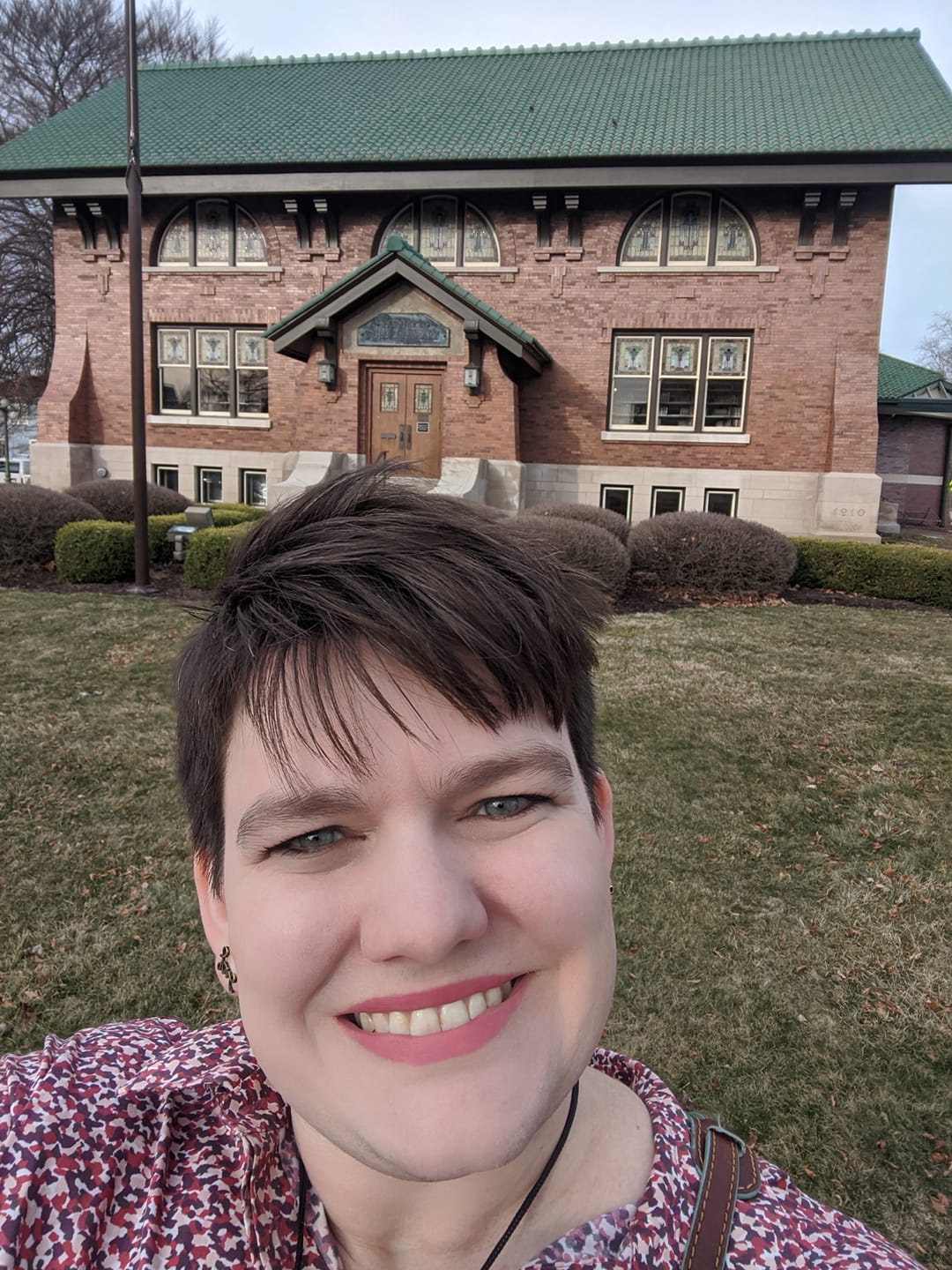
I’ve worked at Eckhart Public Library for almost seven years, and for more than a third of that time, our library has been coping, in one way or another, with really tough situations.

Early in the morning on July 2, 2017, someone threw a large mortar-style firework in the book drop connected to our Main Library building, starting a fire that destroyed the interior of the building, including every single book and DVD we had there, artwork, furniture, computers and more. We spent 987 days with our Main Library building closed, operating out of our Teen Library and Genealogy Center buildings, as well as a storefront we rented. On March 15, we reopened the Main Library to the public, and were opened for service for a whopping 12 hours before we closed due to COVID-19.

To say that the past 1,000 days have been tough is an understatement. However, during these difficult years, I’ve learned some great techniques for coping – and even thriving – through tough times!

Slow down, you move too fast
The instinct when an emergency happens is to act. And, it’s true – there will be urgent matters. For example, only a few hours after our incredible firefighters had put out the fire, our director, Janelle Graber, went in and grabbed important financial documents from her office. When we decided to close for the COVID-19 pandemic, we had to notify staff and patrons as soon as possible. But once a situation has been stabilized, put the slow clock on and try to be as calm and methodical as possible in your response. Take time to sit down and make a plan. It will feel wrong, because you will absolutely want to do something tangible to try to make the situation better, but it’s not helpful to rush around without a plan, or with only a vague plan.

Throw a pity party!
When times are tough, some of us try to put on a brave face. It’s important, particularly if you’re in a leadership role, not to seem like you’re losing it when something bad happens, but it’s also vital to feel your feelings of grief, anger, fear or whatever else you’re feeling. One of my favorite techniques for working through those feelings is one that my mom has used over the years, particularly when she’s had tough medical issues such as cancer – I throw myself a pity party! When I start to feel like I want to cry, or rant, or pout – or all three at once – I look at the clock and give myself 15 minutes to do just that. It’s very cathartic to give yourself permission to feel whatever you’re feeling, and it’s helpful to have a time limit to avoid getting into an unhelpful cycle of grief or anger. If you’re in a leadership position, make sure your staff also has access to the tools to help work through their feelings – whether that’s bringing in someone who specializes in grief, someone to lead a meditation or relaxation session or just a sympathetic ear. That was something we missed in the immediate aftermath of the fire, and it made it harder for all of us to move forward.

Flex your flexibility muscles
Being flexible is absolutely essential when dealing with an emergency or a tough situation. Making plans is very important, of course, but those plans must be able to change when the situation warrants it. Especially in an emergency situation, flexibility will get you far. As we got ready for our reopening and realized how the COVID-19 pandemic would affect it, we had to scale back our celebration, figure out how to protect the staff and patrons, and prepare for the possibility of closing the library completely. Everybody needs to be poised to be ready to react to changing situations.

Communication is key
Honestly, communication is always key in an organization, but there’s no time that it’s more important than in a difficult situation. Our management team struggled with wanting to have solid answers after the fire, and sometimes that caused us to wait until all of the pieces were in place before we told the rest of the library team what was going on. However, in such a scary situation, some information is better than no information. Members of your team don’t necessarily need every detail, nor do they need a constant trickle of information, but updates, even updates that are simply, “We’re not sure what the next step is, but we’re working on it,” are soothing. Remember, too, that communication is a two-way street. Library leadership need to listen to what staff are saying, and try not to get defensive if staff are confused or upset. Sometimes they just need to know that a leader in your organization knows what’s going on. And if you’re not part of that decision-making process, have patience for the people who are. Remember that everybody, at all levels of the organization, is stressed out and trying to figure out what to do.

Call in the cavalry!
No matter how amazing your library is, you can’t do this alone. And don’t feel like you need to! Call on your partners, volunteers and advocates to help out! After the fire, we needed places to meet and to hold programming. Our Community Foundation building became a home-away-from-home, particularly for meetings during those early days. Our grand finale of our Summer Reading Program was two weeks after the fire, and we were able to switch it to a local park, borrow lawn games from other libraries and have partner organizations bring games and activities. Talk to your supporters about what they can do for you, and what they can do to boost morale at your library. Even something as simple as a batch of chocolate chip cookies from a friends group member or $5 gift cards to your local coffee shop for staff can go a long way to making things look brighter in a dark time.

Take a break
During a tough time, your coworkers and patrons need you for the long haul. That means that your mental and physical health is extremely important. It can be hard for those of us who are passionate about our libraries to take a vacation, or sometimes even just a lunch break, in the midst of a difficult situation, but burnout is real and exhaustion can make you sick – and that doesn’t help your organization, your coworkers or your patrons! Everybody needs time to recharge, so don’t be afraid to take the time that you need. You’ll end up being more productive and better able to deal with challenges when you’re well-rested and healthy.

Always look on the bright side of life!
Our biggest challenges can sometimes also lead to unexpected wins. After our fire, we were able to sit down and really consider what our patrons need from a 21st century library. We had been starting to work on weeding, and suddenly we were able to work on building an incredible collection. Even the COVID-19 pandemic has allowed us to expand virtual programming, work on professional development, and bring more attention to our digital collection. You don’t have to be relentlessly positive – again, it’s good to spend some time grieving or worrying – but there are silver linings to nearly every difficult situation.

And finally …
Hang in there! This is an incredible and unprecedented challenge, but Indiana libraries – and libraries all over the country – are doing an amazing job responding! You’ve got this!

This post was written by Jenny Kobiela-Mondor, assistant Director at the Eckhart Public Library.

Working from home? Here are some ideas for librarians

While most of us are working from home during this unprecedented time, it may prove difficult to find enough work to keep librarians and library staff busy without the use of the actual physical library building and materials. Below is a curated list of ideas for librarians and library staff working from home.

  1. Read articles and books for professional development. They do not have to be specific to the world of libraries, either. BooklistLibrary Journal, and Publishers Weekly have all recently made their content freely accessible for everyone. Click the links to access the free journals, including online content and fully-digitized print issues. These are great tools for collection development, but there are many professional library articles as well.
  2. Plan a new program or service.
  3. Prepare for a future program. For example, cut out shapes for a future storytime.
  4. Read a book to someone – a child, an isolated elder, a family member in another town – on the phone or through Facetime or Zoom.
  5. Stock up your Goodreads “pantry”. Start a Goodreads, if you do not have one already, and stock up the shelves with books you have read, favorites lists, books you want to read, etc. Encourage your staff to do this, so that your shelves can be used for reader’s advisory with your patrons in the future. This idea originated from the RA for All blog.
  6. Participate in professional development webinars and virtual trainings. This is a great time to earn LEUs and TLEUs. Not all of them pertain to cataloging.
  7. Create social media posts and blog content for future use.
  8. Create instructional videos to help patrons with various services. For example, how to access digital content, how to place holds online, etc.
  9. Record book trailers or write book reviews to be used on social media or with upcoming programs.
  10. Technical services staff may be able to do some cataloging and metadata work remotely.
  11. Keep in contact with other staff members through video conferencing, using any of the following platforms: Google HangoutsGotoMeetingZoomSlack or Trello.
  12. Collection development for eBooks and digital audiobooks through Overdrive, Hoopla, etc.

Additionally, MCLS has created a handy list of tools and resources to utilize when working from home, which is available here. This is not an exhaustive list of activities. Your library may have come up with some different ideas that have been working well for you. Feel free to share those ideas with us at the Indiana State Library, and we’ll be happy to add them to our list. We would encourage you to be kind to yourself during this stressful and uncertain time. Don’t feel like you need to be watching webinars every waking minute and get completely burnt out or experience technology overload. In the words of the great Theodore Roosevelt, “Do what you can, with what you have, where you are.”

Submitted by Laura Jones, Northwest regional coordinator, Indiana State Library.

EBSCO expands database content available via INSPIRE until June

Amid the COVID-19 pandemic, EBSCO has graciously decided to expand database content available via INSPIRE until the end of June. This includes upgrades from Academic Search Premier to Academic Search Ultimate, with over 9,200 active full-text journals and magazine articles; from Business Source Complete to Business Source Ultimate, with over 3,200 active full-text journals and magazine articles; and from Masterfile Premier to Masterfile Complete. These upgrades are now live and may be accessed on INSPIRE. If you have questions or need assistance with any of the resources on INSPIRE, please contact us. Read EBSCO’s statement below:

“As the library community adjusts to the impact of the COVID-19 virus, EBSCO, as a key content provider and partner for INSPIRE, is looking to ensure end users have access to an expanded breadth of online content. Many college, university and K-12 students will be completing the current academic term in an entirely online format. To assist with this initiative, EBSCO has made the following offering available to all members of INSPIRE: Academic Search Ultimate, Business Source Ultimate and Masterfile Complete. This collection will bring thousands of additional full-text journal and magazine titles into each library’s collection.

Please let us know if you would like direct URLS for your libraries to access the new content.”

Those with questions may contact Deborah LaPierre, senior academic account executive with EBSCO. EBSCO tech support can be reached at 800-758-5995.

EBSCO has also made available all levels of Rosetta Stone until June 30. Libraries interested in access to the expanded edition of Rosetta Stone should contact Leah Griffin, account executive at EBSCO. Library patrons should contact their local public library to inquire about availability.

The upgraded databases can found under the Databases A-Z link on the INSPIRE homepage.

This blog post was written by John Wekluk, communications director, Indiana State Library.

Novel coronavirus COVID-19 resources for libraries

The following blog post is intended to provide general information and should not be construed as legal advice. The author relied on federal law and Indiana law, but did not research any other jurisdictions. Due to the rapid changes of this evolving public health emergency, the most appropriate information and recommendations will likely change daily. The information below is up-to-date as of March 18.

Libraries throughout Indiana are now embracing the dual challenge of meeting community needs while protecting the safety of staff and patrons during the current outbreak of the novel coronavirus, known as COVID-19, as well as other pandemic diseases in the future. Symptoms of COVID-19 include fever, cough and difficulty breathing.

The COVID-19 outbreak provides an opportunity for local public libraries to educate the public using reliable and accurate sources for medical and public health information. The geographic spread of the virus also creates an opening to reinforce libraries’ traditional values of inclusion and non-discrimination.

Libraries are asking about their obligations to staff and patrons during a pandemic. The Indiana State Department of Health advises public facilities to take “every day preventive measures” to help contain the spread of COVID-19. These include:

  • Ensuring adequate hand washing facilities and supplies are available.
  • Posting signs encouraging proper hand washing and respiratory etiquette.
  • Encouraging sick employees to stay home.
  • Encouraging patrons not to enter the building if they are sick.
  • Performing routine environmental cleaning (cleaning all frequently touched surfaces in the workplace).

The Centers for Disease Control and Prevention also recommends that employers create an infectious disease outbreak plan in order to be ready to implement strategies to protect their workforce from COVID-19 while ensuring continuity of operations. See CDC’s Interim Guidance for Businesses and Employers for more information.

The U.S. Department of Labor suggests employers review their leave policies and consider providing increased flexibility to employees and families. Because flexible policies can open the door to discriminatory practices, DOL reminds employers they must administer flexible leave policies in a manner that doesn’t discriminate against employees because of race, color, sex, national origin, religion, age (40 and over), disability or veteran status.

Some of the measures that libraries are already taking include:

  • Increasing the frequency of sanitizing public computer keyboards.
  • Cleaning public contact surfaces twice per day.
  • Making hand sanitizer available in numerous locations (e.g., public computers, circulation desk and staff area) with signs encouraging use and encouraging patrons to use hand sanitizer both before and after using the computer.
  • Encouraging staff to wash hands frequently and thoroughly.
  • Cancelling programs; either some or all for a temporary period.
  • Removing toys or other touch-heavy objects from children’s areas.
  • Curbing outreach to at-risk populations, such as retirement communities.
  • Temporarily suspending requirement of a doctor’s note for an extended staff absence.
  • Closing temporarily, reducing services or changing the services provided.

The following resources provide additional suggestions and information:

Every Library: Resources for Libraries on Coronavirus
Library Journal: What Public Libraries Need to Know about the Coronavirus

Libraries do not need to start from scratch in designing new policies and procedures to address COVID-19 or other pandemic diseases. We urge you consult your library’s attorney before proposing changes or additions to your library’s policies, but the following resources can serve as templates to help you get started:

As we move through this ever-changing public health crisis, it is reassuring to discover so many organizations sharing freely of their time and resources to help us all figure out what we need to be doing.

Written by Cheri Harris, certification program director/legal consultant at the Indiana State Library

Stuck at home? Enriching activities to do with all ages from the Indiana Young Readers Center

Looking for extra activities to keep children busy? Explore some of these activities put together for you by the Indiana Young Readers Center, located in the Indiana State Library. Remember, children of all ages can benefit from play and reading. Keep your kids engaged with some of these resources.

Ages 0-5
Parents with very young children have a big challenge. Little children will not understand what is happening in relation to the current COVID-19 situation. They might sense the fear and anxiety in their parents and react to that by being cranky and unmanageable. Keep them engaged by trying some of the activities listed in our Indiana Early Literacy Firefly Award Program Guides. We have three guides from 2018, 2019 and 2020 all chock-full of fun, developmentally-appropriate activities for little kids. Even if you don’t have the books listed in the guides, you can still do most of the activities.

For children ages 0-5 the best thing to do is to talk, sing, read, write and play with them. We know little kids can’t really write yet, so anything you can do to get them using their hands to work on fine motor skills is a good thing. Examples are block play, crafts, finger painting, playing with pots and pans and so much more.

Ages 6-9
Children in this age bracket are more independent and may be missing their friends and social connections. Involve them in planning out your day of activities. They can do so many things, and many of them independently. Have a game tournament. Start a reading challenge. Keep them involved in the world from inside your home by talking about nature. The Indiana Nature Conservancy has put together a guide for sharing with children to get them more connected to nature. Most of the activities in the guide can be done right at home.

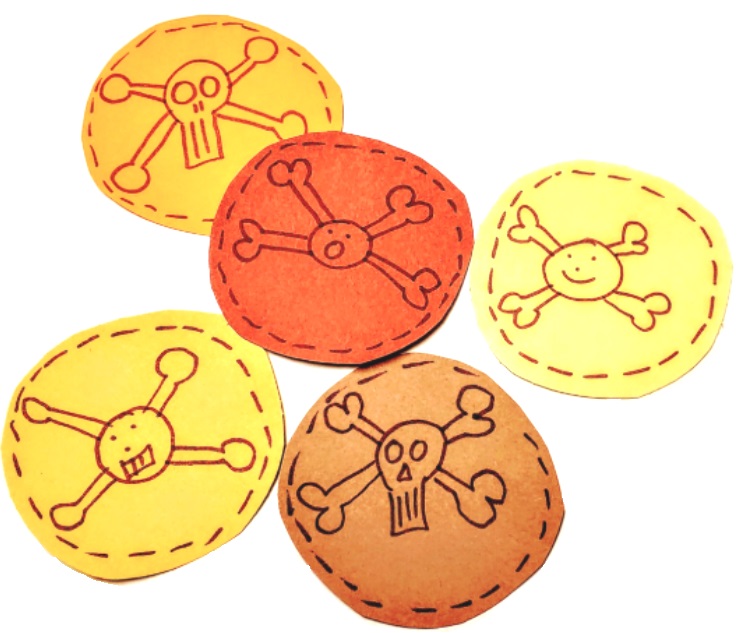
This age group might enjoy many of the ideas in the aforementioned Firefly guides as well. The 2020 guide in particular has activities appropriate for older children on topics like Africa, optical illusions and pirates!

Ages 10 – 14
Even though your preteens might be the group most likely to tell you that they are bored, they are also developmentally ready for more mature thinking. They will have a better understanding of what is going on than little children and can brainstorm with you about how to spend the days in productive and balanced ways. Kids in this age group are often passionate about their interests and may be missing their friends.

Genealogy
The Indiana Young Readers Center has put together a genealogy program for children in this age group. Take this time to talk about family and the practice of genealogy. What is it anyway? Share family stories and history. Work through the program guide and learn about the kinds of documents that genealogists refer to when filling in their family trees. Do you have any documents in your home right now that you can examine?

  • Indiana Young Readers Center Genealogy Program Guide

Indiana History
If you are looking for more academic resources, take a look at this video about two of the murals located in the Indiana State Library. They discuss the history of Indiana Statehood. Talk to your school age students about how the United States was created. Who lived here when settlers arrived in Indiana? If you’d like to have a more robust conversation, take a look at the discussion questions that we use during our fourth grade field trips.

Still hungry for more history content? Explore the Indiana Historical Marker Program coordinated by the Indiana History Bureau. Every Indiana county has at least one marker. Choose an Indiana social studies standard for your student to work on. Fourth grade standards are especially relevant to Indiana history. Find a marker that relates to that standard. Take it further by researching a little more using Indiana State Library’s Digital Collections. This project could fill a whole morning and introduce your student to great online resources.

Keep a Journal – Good for all ages
Encourage children in all age groups to keep a journal about how they are feeling and what is going on around them. This is a historic time. Researchers in the future will be fascinated by primary resources like journals and diaries written by Hoosier children. Those future primary resources will not exist unless we create them now. Someday, your child could donate their journal to the Indiana State Library!

Letters About Literature  – Grades 4-12
Do your kids like reading and writing? Every year the Indiana State Library hosts a writing contest for students in grades 4-12 called Letters About Literature. Students write to an author, living or deceased, about a book that changed how they see themselves or how they understand the world around them. Students write to us every year about how books help them understand topics close to home like family and school or more sophisticated topics like racism and war. The contest for 2020 is closed, but students can always get a jump on working on their letter for next year. Visit the Letters About Literature website for more information about the contest. Your student could get published!

Ages 15-18
High schoolers are more likely to be able to fill their own time, however they may be in need of resources to help them with their existing school work. Be sure to get familiar with INSPIRE. INSPIRE is Indiana’s virtual online library, a collection of online academic databases and other information resources that can be accessed for free by Indiana residents. INSPIRE includes full-text magazine and journal articles, images, historic newspapers and much more. If students are frustrated about not finding sources for a paper or project, have them try INSPIRE.

Explore Old Journals
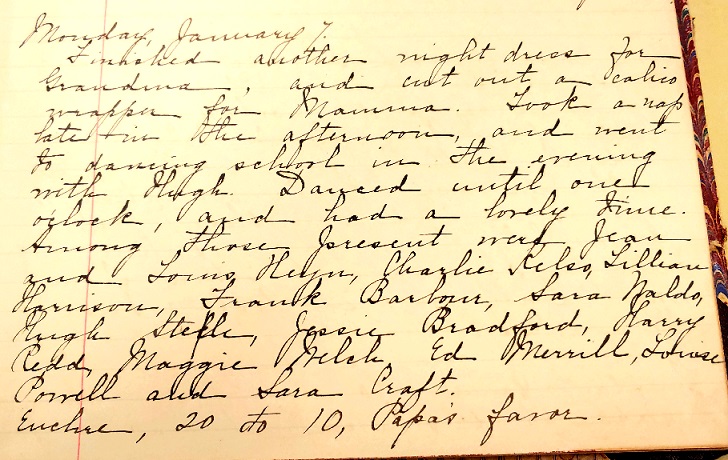
The Indiana Young Readers Center has put together a packet for teens interested in reading old diaries. Work through the packet to learn about the value of writing journals and researching old diaries. The diaries in the packet are written in cursive! Does your student know cursive? Take this time to teach your student the basics of cursive writing. Why is it important for students today to be able to read and write in cursive? Explore this question with your student. Fun fact: One of the diaries is from 1896 and the writer talks about playing euchre with her family!

  • Indiana Young Readers Center Diary Program Guide

Indiana State Library’s Digital Collections
Still looking for something to do? Take a look at some of the interesting things that the Indiana State Library has in our digital collections. From car racing to dogs to historic documents. We’ve got something for everyone:

Indianapolis 500, between 1926 and 1957
Artistic family tree (featuring President James Polk)
Pre-Photoshop trick photo postcard
Studio photos of Chow Chow dogs
South Shore Line broadsides featuring the “Workshop of America,” 1926
Miami Treaty of St. Mary’s, 1818
Preserved ivy taken from Abraham Lincoln’s funeral train 
Letter from D.P. Craig, a soldier with the 14th Indiana Regiment to his family, 1862
Awards given to African American WACs at Camp Atterbury, 1943
Women’s suffrage pamphlet with map, ca. 1915
Susan B. Anthony letter to Grace Julian Clarke, 1900-01-11 
Locks of hair presented to John. M Conyers (March 29, 1865)

In these unprecedented times, we hope these enriching activities will keep children of all ages engaged and busy.

This blog post was submitted by Indiana Young Readers Center Librarian Suzanne Walker.