
“Don’t confuse me with the facts. I’ve got a closed mind. I will not vote for impeachment. I’m going to stick with my president even if he and I have to be taken out of this building and shot.”[1]
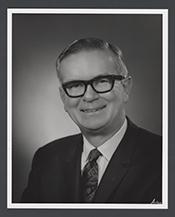 This infamous quote was given by Indiana Rep. Earl F. Landgrebe the day before President Richard Nixon formally resigned. Prior to being elected as representative for Indiana’s 2nd District, Landgrebe had served in the Indiana State Senate from 1959 to 1968. In 1968, he succeeded Charles A. Halleck as a member of the U.S. House of Representatives in the same election that also put Nixon in the White House.
After Landgrebe was defeated in the 2nd District by Floyd Fithian, the Indiana State Library acquired his political papers from his period at the U.S. House of Representatives from 1968 to 1974. Previously sealed, the papers were recently processed – a project of about 18 months – and are now open for research under the identifier L625.
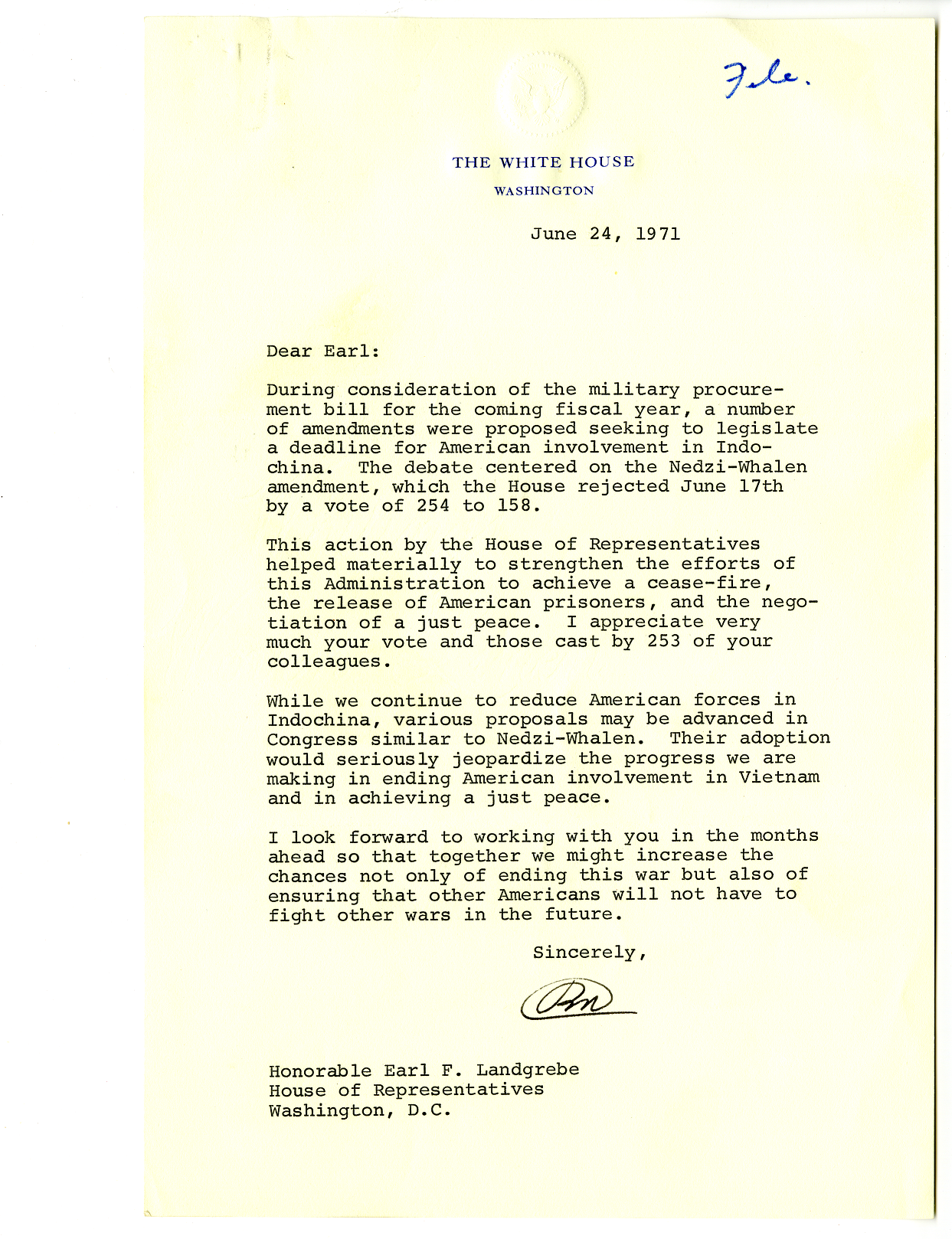
A piece of correspondence from Nixon to Landgrebe.
Typical hallmarks of 20th century political papers include correspondence with other politicians and notable contemporary figures, correspondence from constituents regarding issues of the day and in-depth discussion and research into issues that were important to the politician and the population they were serving. Besides standard correspondence between Landgrebe, his constituents and other notable Hoosiers and the day-to-day functions of a U.S. representative, the collection includes material on several other notable topics. For example, the Indiana subject files give a snapshot of the strengths and needs of the Hoosier state during the early 1970s. Organized alphabetically by topic or state agency, these papers show how the state was handling anything from education to veterans’ affairs at the time and to what extent Landgrebe was involved.
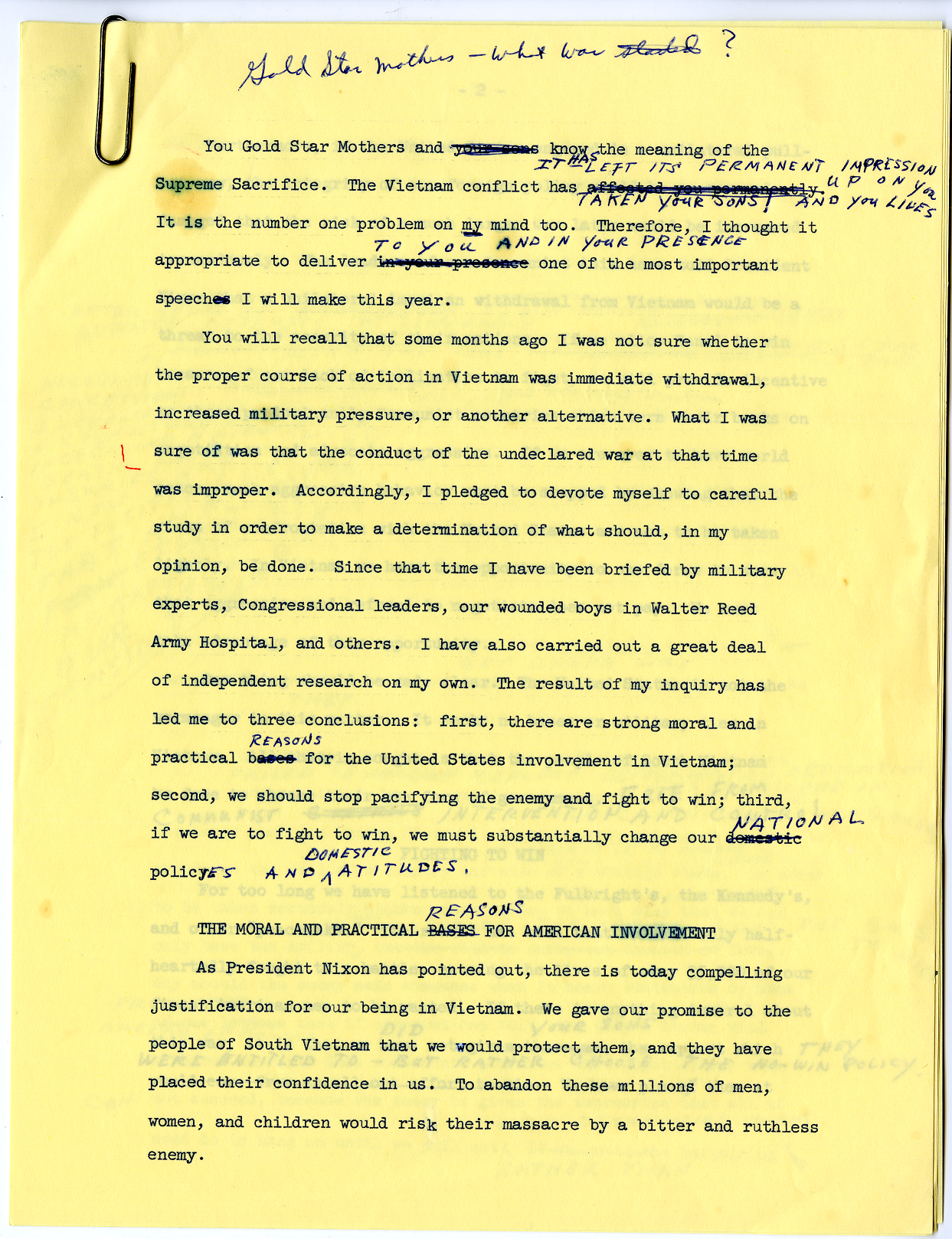
A draft of a speech on Gold Star Mothers.
Series 2, pertaining to legislative affairs, is the deepest area of the collection. There is extensive coverage on notable issues from Nixon’s administration, including Vietnam, the draft, Watergate, abortion and OSHA. Another area of interest, particularly to Indiana researchers, is the material on the Indiana Dunes National Lakeshore. After 1966, when the National Lakeshore was established, there were efforts to expand the boundaries of the park, which Landgrebe opposed, as he opposed most things! The first expansion bill wasn’t completed until 1976, but there is a great deal of information on the Indiana Dunes National Lakeshore in the collection from the years 1969 to 1974 when Landgrebe was in Congress.
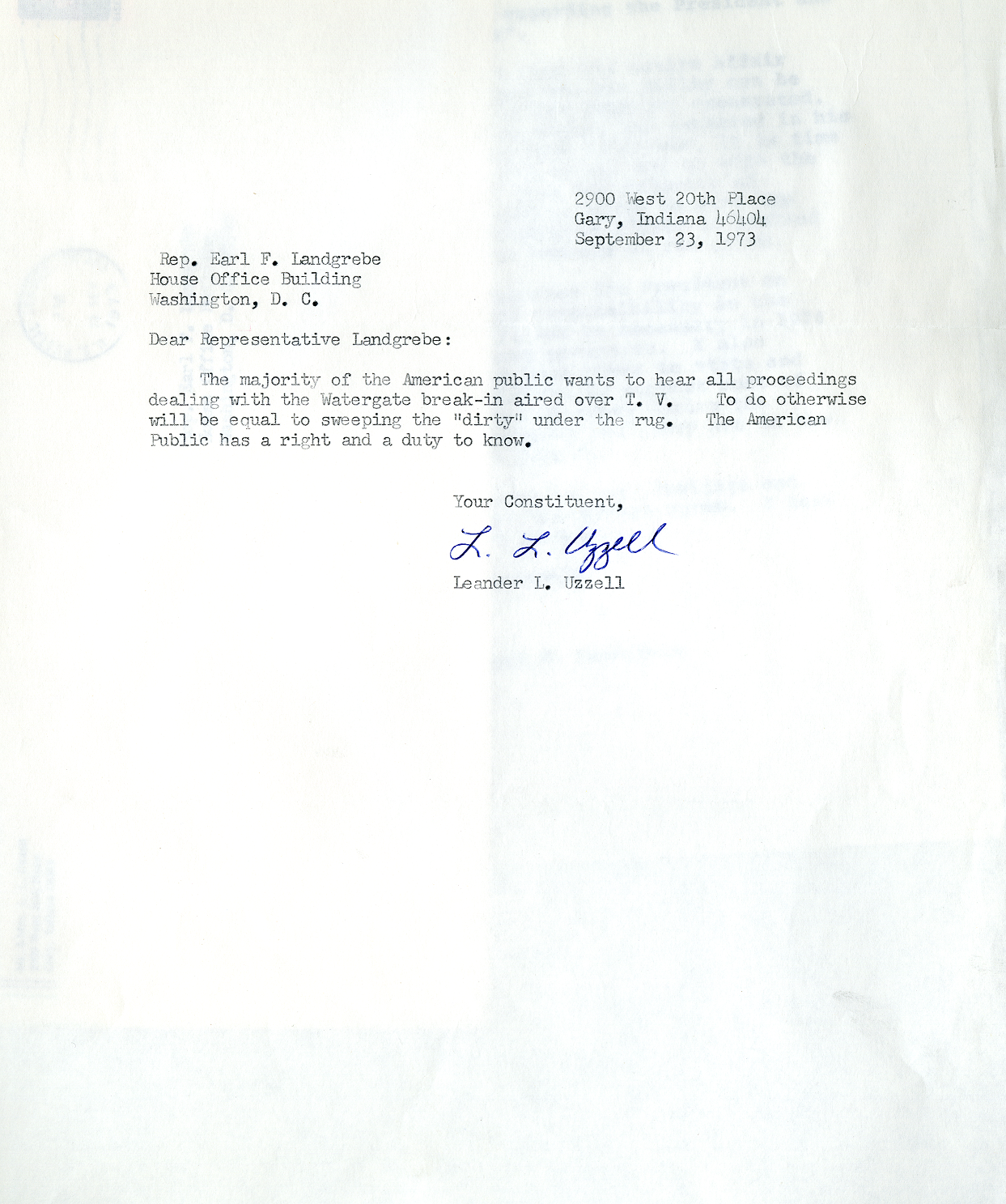
A piece of constituent correspondence on Watergate.
In 1974, Landgrebe returned home to Valparaiso and resumed presiding over his family trucking business. He died on July 1, 1986. Despite being a contentious presence in the U.S. House as well as in his district, Landgrebe leaves behind a wealth of information about the legislation and social debates of 1970s America. This collection serves as a fruitful resources for researchers of Indiana politicians, 1970s politics, the Vietnam War, the history of Northwest Indiana and more.
[1] Pearson, Richard, “Obituaries: Earl F. Landgrebe,” Washington Post, July 1, 1986, Accessed September 6, 2018.
This blog post was written by Lauren Patton, Rare Books and Manuscripts librarian, Indiana State Library. For more information, contact the Indiana State Library at 317-232-3678 or “Ask-A-Librarian.”